

- Start with a standard 400–459 grain bolt for deer and go heavy (460+ grain) for bigger game; both count the finished bolt with its point.
- Your crossbow’s minimum bolt weight in the manual comes first: going lighter can act like a dry fire and void the warranty.
- Heavier bolts are quieter and hit harder, but fly slower and drop more at long range.
- In one test, a 682-grain bolt hit only about 2 inches lower at 30 yards than a 451-grain bolt.
350, 400, 500 grains and up: the bolt aisle is a wall of numbers, and a bolt that’s too light can damage your crossbow. 😬
For most hunters the answer is a standard bolt of 400–459 grains total, never below your manual’s minimum, going heavier for bigger game. Get that right, then check your bolt’s FOC so every bolt lands where you aimed. 🙌
Crossbow bolt weight categories: light, standard and heavy
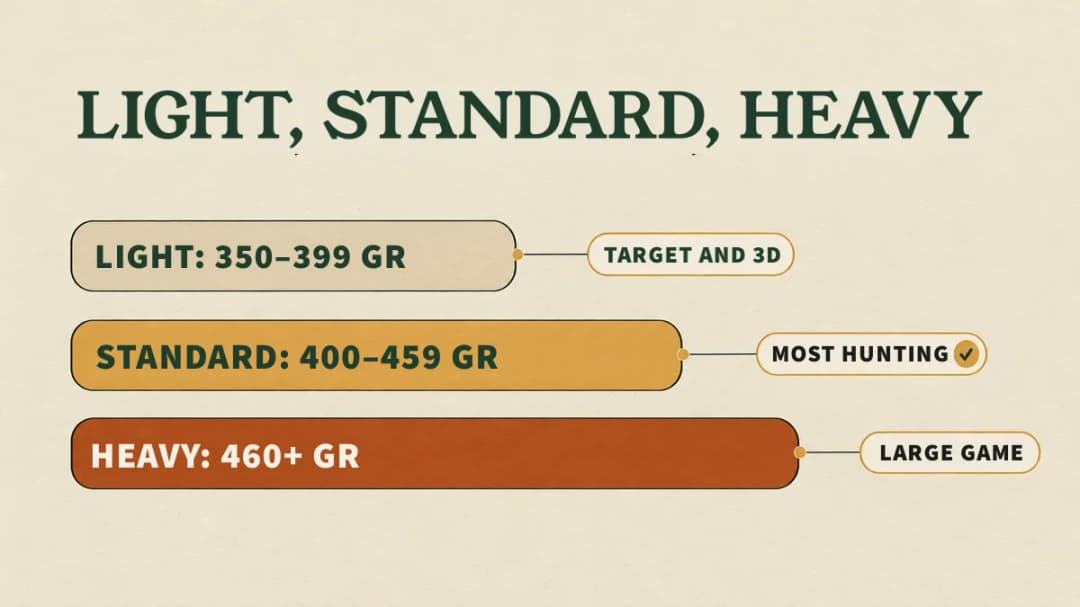
Bolt weight is measured in grains (7,000 grains = 1 lb) for the finished bolt: shaft, insert, nock, vanes and point. TenPoint sorts bolts into three classes:
| Weight class | Total weight | Strengths | Best use |
|---|---|---|---|
| Light | 350–399 grains | Fastest, flattest trajectory | Target and 3D shooting |
| Standard | 400–459 grains | Balance of speed and energy | Most hunting, including deer |
| Heavy | 460+ grains | Most energy and penetration, quieter | Large game, tough shot angles |
For hunting, TenPoint recommends a standard or heavy bolt, and says a standard bolt works in nearly every situation without risking damage to the crossbow. That makes 400–459 grains the safe starting point for most hunters.
TenPoint makes the same case in its own tech tip on arrow selection (the video near the end of this post). So listen for why it puts energy ahead of speed:
If you’re using your crossbow for hunting purposes, you should consider shooting a standard weight or heavyweight arrow. Despite the fact that these arrows will shoot more slowly, they carry a greater amount of kinetic energy or penetration power as compared to a lightweight arrow.
I agree, with one order of operations: your manual’s minimum comes before any of this. Standard or heavy is the right pick for deer, but only once you know the lightest bolt your crossbow is built to take.

// Free printable
Get the range log I actually use.
Seventeen printable pages: session log, score tracker, a 30-day drill challenge, a bow maintenance card, a first-season checklist and more. Join the monthly email and it lands right away.
Minimum bolt weight: protect your crossbow first
Before you think about speed or penetration, find the minimum bolt weight in your manual. Every maker sets one and it varies by model and year.
| Maker | Minimum total bolt weight |
|---|---|
| TenPoint and Wicked Ridge (2012 and later) | 370 grains, including a 100-grain point |
| TenPoint and Wicked Ridge (before 2012) | 420 grains, including a 100-grain point |
| Excalibur Mag 340 | 350 grains (per listings) |
| Any other crossbow | Check the manual for your exact model |
What about grains per pound?
Compound bow makers often set a minimum of 5 grains per pound of draw weight. For crossbows, hunters often quote a rule of thumb of about 2 grains per pound, but the manual’s number always wins over any formula.
Why heavier crossbow bolts work well for hunting
A heavier bolt soaks up more of the crossbow’s energy. That brings two clear benefits, and its one cost, extra drop, is smaller than youd think.
1. More kinetic energy and momentum
Kinetic energy in foot-pounds is bolt weight in grains × speed² ÷ 450,240. A 682-grain bolt at 380 fps carries about 219 ft-lb, and a 400-grain bolt at 400 fps about 142 ft-lb.
Heavier bolts also carry more momentum, which helps them push through hide and bone. That’s why heavy bolts are the pick for elk-sized game and tough angles.
2. A quieter shot
In a Grand View Outdoors test on a TenPoint Nitro XRT, a 682-grain bolt measured 91.1 dB vs 95.1 dB for a 451-grain bolt. The reading came from a phone app held 6 inches from the bow, so treat it as rough.
A 4 dB drop is about 2.5 times less sound energy: real, but modest. For more ways to cut noise, see how to make your crossbow quieter.
TenPoint explains where that quieter shot comes from, and adds a benefit that’s easy to miss:
Standard weight and heavyweight arrows also make your crossbow quieter, since more energy is required to accelerate a heavier arrow, leaving less energy to be dissipated from the crossbow as vibration or game spooking noise… Shooting these arrows also means there’s less wear and tear on your crossbow.
The last line is the one I’d remember. A few decibels is a modest gain; less wear on the limbs and string every single shot adds up over seasons. It’s the same reason a too-light bolt is so hard on a crossbow.
3. Less trajectory change than you’d think
Heavier bolts are slower, but at normal hunting range the difference is small. Sight in with the exact bolt you’ll hunt and the drop takes care of itself.
To be fair to light bolts, TenPoint gives their real advantage too:
This means if you misjudge the distance to your target, a lightweight flatter shooting arrow will drop less fast and you’ll miss your mark by a smaller margin than if you had used a heavier arrow. Archers often refer to lightweight arrows as being more forgiving.
That’s true, and it’s why light bolts win at 3D shoots with unknown distances. For hunting I’d fix the distance instead of the bolt: range the spot before the deer gets there, keep your shots close, and the heavier bolt’s extra drop stops mattering.
How to choose your bolt weight: a 5-step method
You don’t need to guess. Follow these steps in order:
- Find your minimum in the manual and stay above it.
- Start standard: 400–459 grains total, with the point weight your maker recommends (often 100 grains).
- Go heavier (460+) for larger game or if you want a quieter shot.
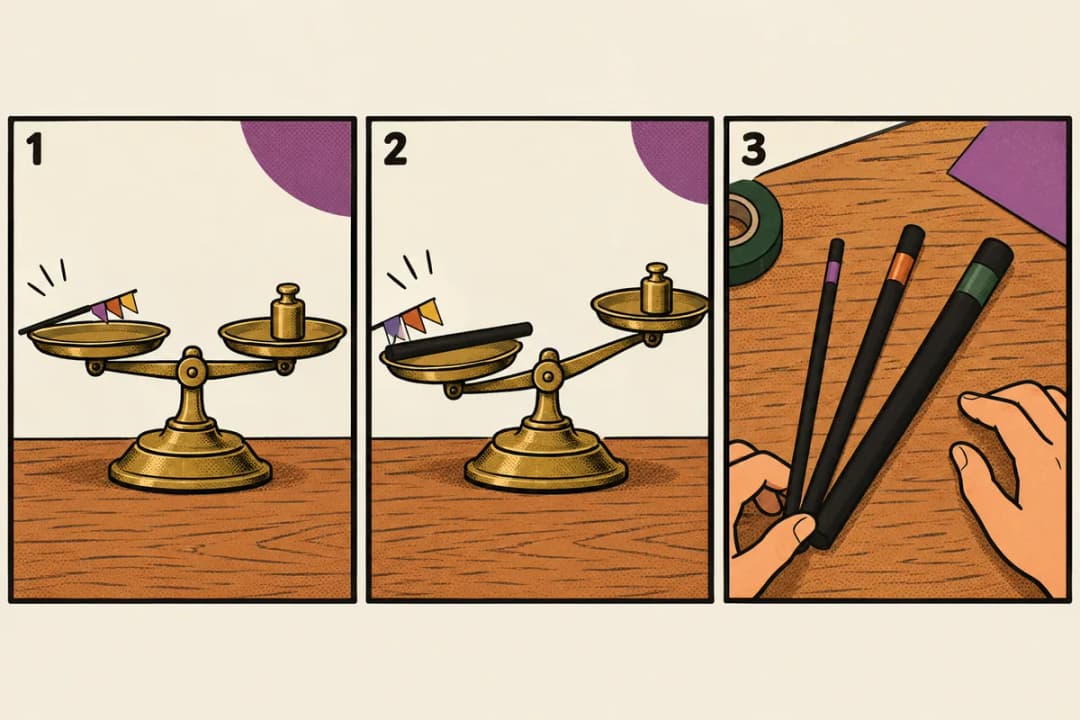
- Weigh a few bolts on a grain scale so you know your real total.
- Re-sight your scope with the bolts and broadheads you’ll hunt with.
My guide to the best crossbow bolts lists options in each weight class, and you can tune balance further by checking the FOC of your crossbow bolts.
Do’s and don’ts of crossbow bolt weight
A few habits keep your setup safe and consistent. Weight consistency matters as much as the weight itself.
| Do | Don’t |
|---|---|
| Stay above the minimum weight in your manual | Go below the manufacturer’s minimum |
| Keep every bolt in your quiver the same weight | Mix bolt weights in one quiver |
| Match broadhead weight to your field points | Forget to re-sight after changing weight |
| Test at the distances you’ll actually hunt | Assume heavier is always better at long range |
| Store bolts in a case so they don’t bend | Shoot a cracked or bent bolt |
Prefer to watch? TenPoint explains how to choose between heavy and light crossbow arrows.
// FAQ
Frequently asked questions
Quick answers to the questions readers ask most.
What grain bolt is best for deer?
A standard bolt of 400–459 grains total works for most deer hunting. Stay above your crossbow’s minimum and sight in with your broadheads.
Is a heavier crossbow bolt better for hunting?
Yes, for most hunting: it carries more energy and momentum and is quieter. It’s slower, so it drops a little more at long range.
What is the minimum bolt weight for a crossbow?
Your crossbow’s manual sets it. TenPoint’s 2012-and-later crossbows, for example, need at least 370 grains total.
Does broadhead weight change bolt weight?
Yes, the point is part of the total. Most crossbows are set up around 100-grain points, so changing that weight means re-sighting.
Does weather change which bolt weight I should use?
Heavier bolts are a little less affected by wind, but no bolt weight fixes a bad wind call. Keep shots close on windy days.

Final thoughts
Start with your manual’s minimum, then pick a standard 400–459 grain bolt for most hunting or go heavier for bigger game. Keep every bolt the same weight and sight in with what you hunt.
Grab a grain scale, weigh what you’ve got, and note the results and your groups in the free range log.
