
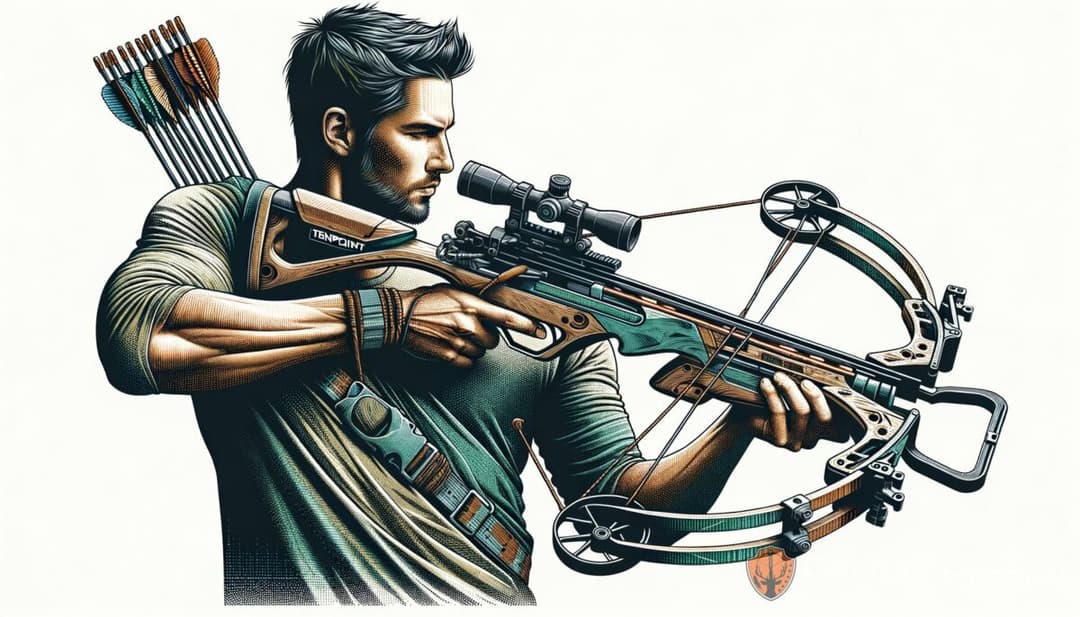


- Most modern crossbow strings are made from Dyneema (HMPE) fiber, either pure or blended with Vectran.
- BCY lists Mercury 2 and DynaFLIGHT 97 for modern crossbows, and polyester B55 for older ones.
- Low-creep materials hold their length, which keeps your power stroke and point of impact consistent.
- Wax the string, not the center serving, and follow your crossbow maker’s lube schedule.
- TenPoint says to replace string and cables every two years; Ravin says every two years or 400 shots.
Fuzzy fibers, a separating serving, two seasons of shots: a string doesn’t warn you much louder than that before it snaps while cocked. 😬
Buy a string made for your exact model, usually low-creep Dyneema such as BCY Mercury 2 or DynaFLIGHT 97, and replace it on your maker’s schedule. Wax it between changes and every shot starts from the same string.
What a crossbow string does and why the material matters
The string transfers the energy stored in your limbs to the bolt. If it stretches or creeps, your power stroke changes, and so does where your bolt hits.
Crossbow strings work under far more tension than vertical bow strings so they use more strands of very strong fiber. Most are made from HMPE (high-modulus polyethylene), better known by the brand name Dyneema.

// Free printable
Get the range log I actually use.
Seventeen printable pages: session log, score tracker, a 30-day drill challenge, a bow maintenance card, a first-season checklist and more. Join the monthly email and it lands right away.
Types of crossbow string materials: pure Dyneema, blends and polyester
Crossbow strings come in three material families. Here’s what each is made of and which crossbow’s it suits.
Pure HMPE materials: Mercury 2 and DynaFLIGHT 97
Mercury 2: BCY calls it its top crossbow string material. It’s 100% high-strength Dyneema with very low creep, and BCY recommends 26–32 strands for crossbows.
DynaFLIGHT 97 (D97): BCY’s original high-strength Dyneema bowstring material, used on many standard crossbows. BCY lists low creep at its recommended 26–28 strands.
Polyester for older crossbows: B55
B55 is 100% polyester, similar to old Dacron strings, with more stretch than Dyneema. BCY says it’s used on older compound crossbows and on bows without reinforced limb tips, with 20–24 strands for crossbows.
Blended materials: Dyneema plus Vectran
Blends mix Dyneema with Vectran, a fiber that barely creeps. The goal is a string that holds its length better than pure Dyneema.
BCY 452X: 67% SK75 Dyneema and 33% Vectran, which BCY lists with no creep. It’s a popular bowstring material, but check that your string maker offers it for your crossbow.
BCY-X: 83% SK90 Dyneema and 17% Vectran in BCY’s press material, with no creep and strong abrasion resistance. Some string builders say BCY has moved to a newer X-99 version.
BCY 8125: a fast, thin Dyneema material. Older 8125G listings give 92% SK75 Dyneema and 8% Gore fiber, while newer listings say 100% SK75.
| Material | Fiber | Creep | Crossbow strands (BCY) | Typical use |
|---|---|---|---|---|
| Mercury 2 | 100% Dyneema | Very low | 26–32 | Modern high-performance crossbows |
| DynaFLIGHT 97 | 100% Dyneema | Low | 26–28 | Many standard crossbows |
| B55 | 100% polyester | Stretchy | 20–24 | Older crossbows, unreinforced limb tips |
| 452X | 67% Dyneema SK75, 33% Vectran | None listed | Not on BCY’s crossbow page | Low-creep custom strings |
| BCY-X | 83% Dyneema SK90, 17% Vectran | None listed | Not on BCY’s crossbow page | Low-creep custom strings |
Crossbow string construction: center serving and end servings
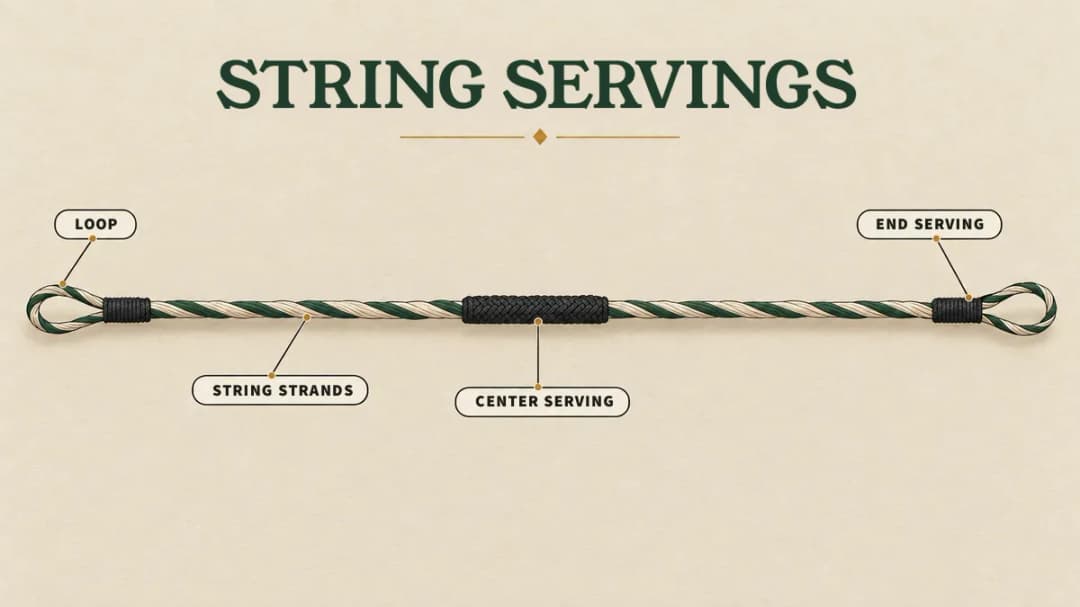
Servings are tight wraps of thread around the string that protect it where it wears. They take the abuse so the string strands don’t.
Center serving: the middle section that slides along the rail and holds the bolt’s nock. It’s usually a tough braided serving, and it wears fastest of any part of the string.
End servings: the wraps at each loop, where the string attaches to the limbs or cams. They protect high-stress points from fraying.
Elasticity vs creep: why low creep matters for crossbows
- Elasticity is stretch that springs back. A little can soften the shock on older limbs, which is why B55 suits older crossbows.
- Creep is stretch that doesn’t come back. Over time it changes your string length, power stroke and point of impact.
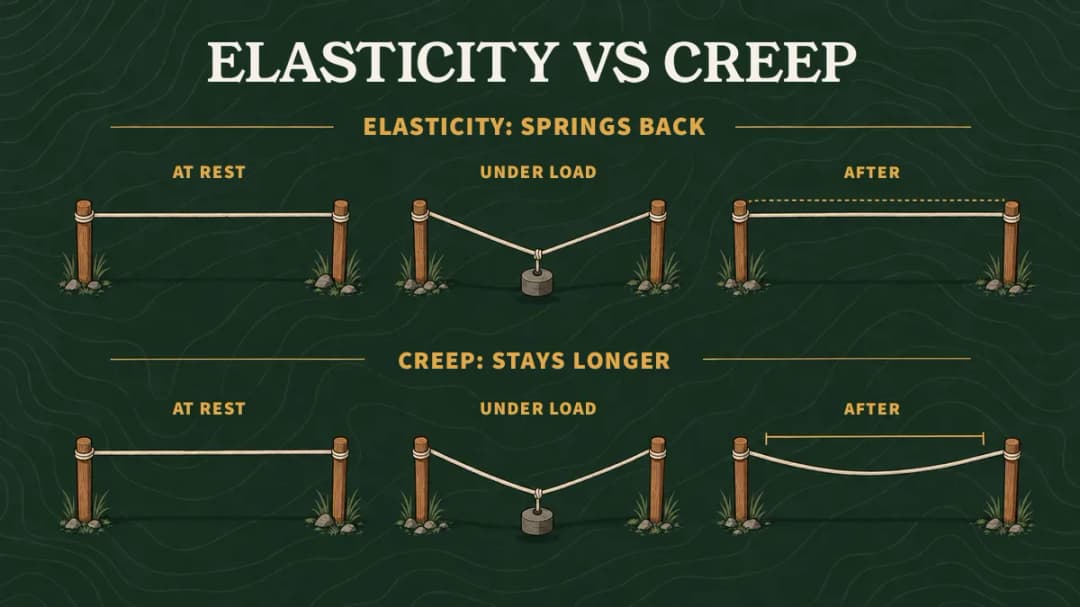
So that’s why modern crossbows use low-creep Dyneema or Dyneema-Vectran blends. A string that keeps its length keeps your scope zeroed longer.
How to choose the right crossbow string for your crossbow
- Know your crossbow: check the manufacturer’s string length, material and strand count. Many makers sell factory replacement strings for each model.
- Define your goal: most shooters want consistency, so pick a low-creep material over a slightly faster one.
- Match the age of your crossbow: older crossbows with unreinforced limb tips may need a polyester string like B55.
- Plan for maintenance: buy a string you’ll wax and inspect, and replace string and cables together.
For more on what each part of your crossbow does, see my crossbow anatomy guide.
Crossbow string maintenance: inspect, wax and replace
Two habits keep a string healthy between replacements: looking it over and keeping it waxed.
1. Inspect before every session
Look for fraying, fuzz, loose servings and small cuts. Check the center serving closely, because it takes the most wear.
2. Wax the string and lube the rail
Rub a thin layer of crossbow string wax into the string and cables, then work it in with your fingers. Keep wax off the center serving, because buildup can gum up the trigger; most makers want rail lube there instead.
- Follow your manual’s waxing and rail-lube schedule.
- Don’t over-wax: extra wax collects dirt and grit.
- Wipe off grit before it can wear the center serving.
Use the wax your manual names. If it doesn’t name one, pick a wax made for synthetic bowstrings, like Bohning’s Tex-Tite:

Tex-Tite Wax
Bohning 1306 Tex-Tite Bowstring Wax 1oz, Clear
by Bohning
Affiliate link: I may earn a commission, at no cost to you.
Key features
- String wax made for synthetic bowstrings
- Keeps fibers from drying and fraying, so the string lasts longer
- Stays tacky in heat and cold, so it works year round
- Small 1 oz tube that fits in a quiver pocket
Specs
- Brand
- Bohning
- Model
- 1306
- Size
- 1 Ounce (Pack of 1)
- Color
- Clear
- Length
- 9.8 Inches
- Weight
- 0.05 Pounds
When to replace a crossbow string: the 2-year rule
Even a well-kept string wears out. Replace it right away if you see heavy fraying, a separated serving or a change in how the crossbow shoots.
TenPoint also recommends replacing the string if you shoot it into the dry-fire inhibitor. For how strings fit into your crossbow’s overall life span, read how long a crossbow lasts.
// FAQ
Frequently asked questions
Quick answers to the questions readers ask most.
How often should I replace my crossbow string?
Follow your maker’s schedule. TenPoint recommends every two years, and Ravin every two years or 400 shots, replacing string and cables together.
What is the best crossbow string material?
For most modern crossbows, a low-creep Dyneema material like BCY Mercury 2 or DynaFLIGHT 97. BCY names Mercury 2 its top crossbow material.
Can I replace a crossbow string myself?
On many compound crossbows, no, because you need a crossbow press. Ravin and TenPoint point owners to a pro shop or their service department.
Should I wax the center serving?
No. Wax the string and cables, and use your maker’s rail lube on the rail and center serving area.
What is string creep?
Creep is permanent stretch. It changes your string length and point of impact, which is why low-creep materials are preferred.

Final thoughts
The best crossbow string is the one built for your model from a low-creep material, kept waxed and replaced on schedule.
Check yours before your next session, and note the date you last replaced it. My free range log has room for that, and you can keep shooting on one of the best crossbow targets.
