

- Start with a takedown. Keep the riser and buy heavier limbs as you get stronger.
- Start light. Pick 25–35 lb at your draw length; I started at 45 lb and could barely pull it.
- Match length to draw. Longer draws need longer bows, so check the maker’s rated draw first.
- The Sage is the default. It’s the beginner takedown most often recommended to adults.
- Get fitted if you can. A shop can match your draw weight and arrows, which I skipped and regretted.
short on time? start here
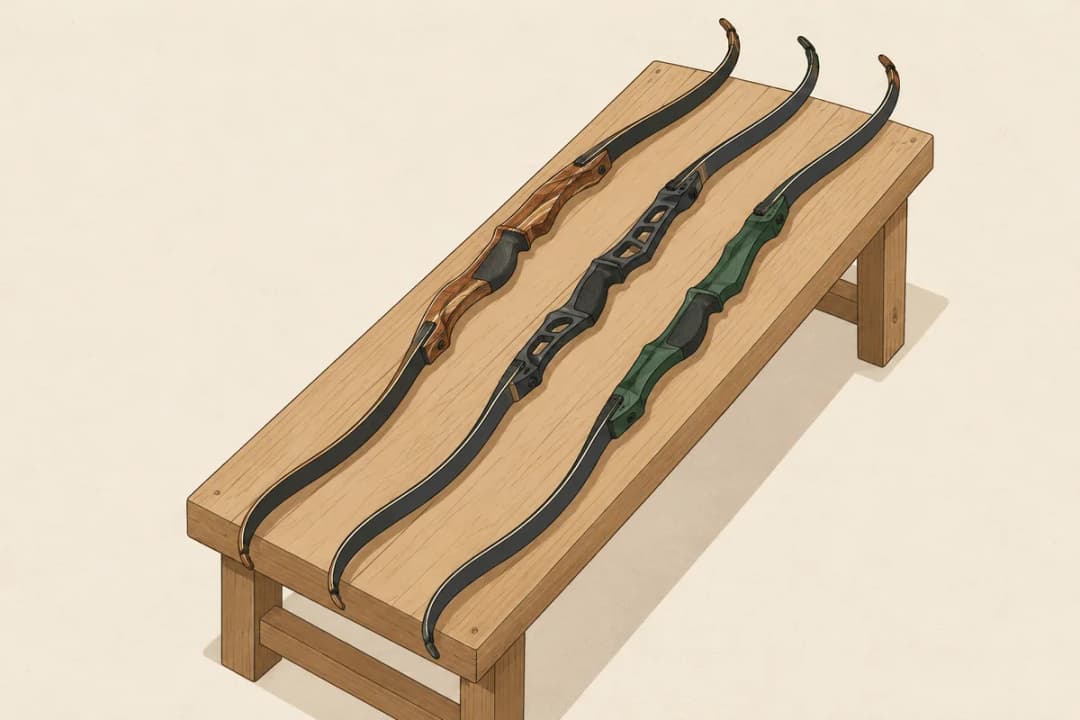
The three I’d start withMy top two picks
You’re ready to buy your first recurve, and every listing says it’s perfect for beginners. 🤔 Buy a takedown in a length that fits your draw, at a weight you can hold: for most adults that’s a Samick Sage with 25–30 lb limbs.
Get the draw weight wrong and you fight the bow instead of learning form (my first bow was 45 lb, and I got maybe three shots in), but get it right and every session builds your form until you’re ready to step up. 💪
How this list was made: My own bow is a one-piece Sanlida Royal X8, which isn’t on this list. These five come from maker specs, retailer listings and published tests (credited at the bottom). They carry no scores until I’ve bought them and shot them for 30 days, same as every review here.
Buy a takedown, with limbs lighter than your ego wants. Upgrade the limbs, not the bow.
The 5 best beginner recurves at a glance
Maker and retailer specs, checked in October 2026. Draw weights are rated at a 28″ draw.
| Bow | Best for | Length | Draw weights |
|---|---|---|---|
| Samick Sage | Your first bow | 62″ | 25–60 lb |
| Tachyon | Shooting off the shelf on day one | 62″ | 25–60 lb |
| Southwest Ghost | A takedown longbow | 64″ | 20–50 lb |
| Galaxy Vega | A hardwood riser, shorter draws | 60″ | See listing |
| Hoyt Satori | Your ILF upgrade | 58″–66″ | By ILF limbs |
#1 Samick Sage: best first recurve for most adults
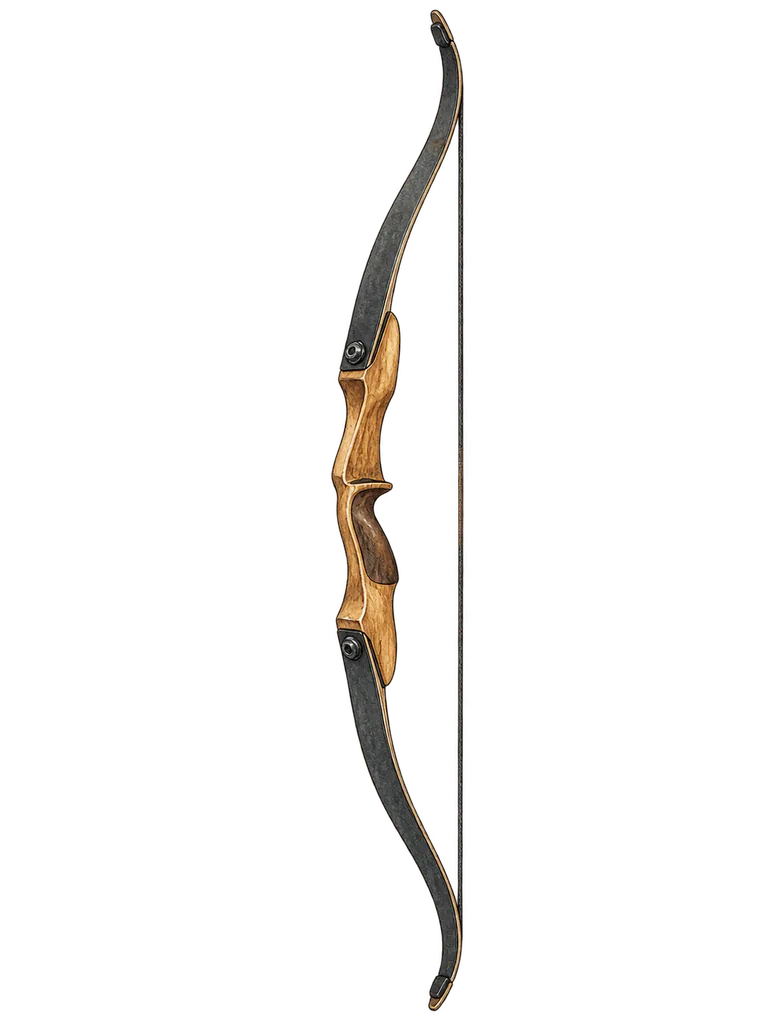
Samick Sage 62″ Takedown Recurve
It’s the beginner takedown most often recommended to adults. The limbs come off with two bolts, so you can start at a light weight and swap up as you get stronger.
If you only read one line of this page: buy the limbs lighter than you think you need.
Length
Draw
Rated draw
Type
- Limbs from 25 to 60 lb on one riser
- Brass bushings for a plunger, stabilizer and sight
- Left- or right-hand
- Check the limbs for twist out of the box
- Stock string and stick-on rest are basic
The Sage is a 62″ takedown with a laminated wood riser and bolt-on limbs from 25 to 60 lb. That range is why it’s the default first recurve: it makes it easy to avoid the most common beginner mistake, a bow that’s too heavy.
Start at 25 or 30 lb to learn form, then buy heavier limbs as you get stronger. Brass bushings let you add a plunger, stabilizer or sight later. It’s rated for a 28″ draw, so longer draws should look at a longer bow.
Lancaster Archery Supply’s video spends a while on the Sage’s grip, and the lesson in it applies to any recurve:
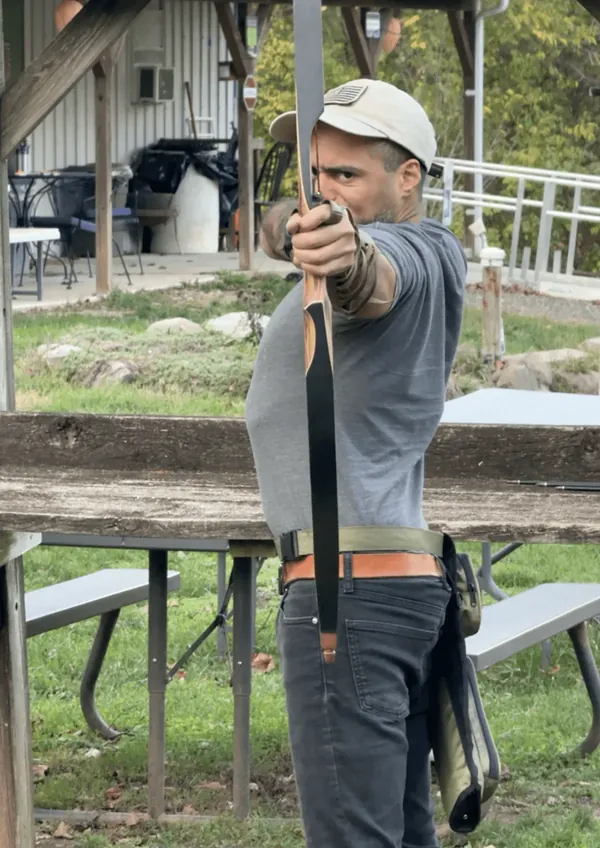
It’s not designed to have our hand wrapped tightly around the grip. Our hand should come in from the belly side of the bow applying pressure towards the target, and we shouldn’t be squeezing the bow, palming the bow or gripping the bow.
It’s an easy form point to get wrong, so here’s my cue for it: push the bow toward the target with the meat of your thumb and let your fingers hang loose. Whatever bow you pick, learn that grip from day one.
Two things to do when it arrives
- Check the limbs. String it with a bow stringer and sight down the string. The limb tips should line up and neither limb should look twisted; if one does, send it back.
- Plan on a better string. The stock 14-strand Dacron string works, and a custom string is a cheap upgrade once you know your setup.
Specs, fit and what to check are in my Samick Sage review.
#2 Tachyon: best for shooting off the shelf
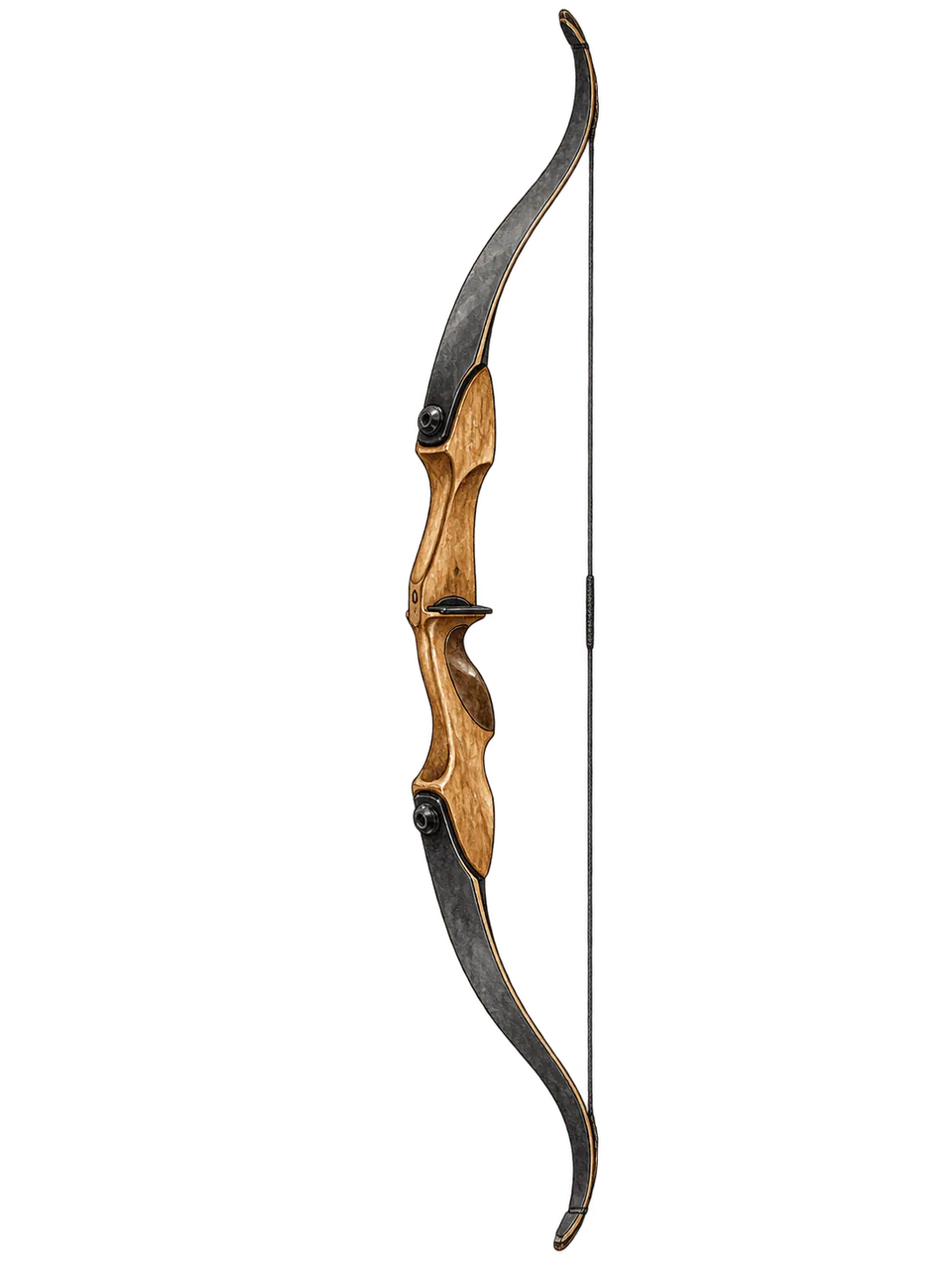
Tachyon 62″ Takedown Recurve
The Tachyon arrives ready to shoot off the shelf: a string, a strike plate, a rug rest and a stringer are in the box.
Heads-up: it has become hard to find. If the link shows it unavailable, buy the Samick Sage instead.
Length
Draw
In the box
- Ready to shoot off the shelf
- String, stringer, strike plate and rug rest in the box
- Sold in left- and right-hand
- Hard to find: several Amazon listings show it unavailable (Oct 2026)
- Few retailers outside Amazon
The Tachyon comes ready to shoot off the shelf. Outdoor Life’s tester called it essentially a Samick Sage clone, and the box holds a string, a stringer, a strike plate and a rug rest.
It’s a 62″ takedown sold from 25 to 60 lb, in left- or right-hand. It has become hard to find: in October 2026 the same tester couldn’t find it on Amazon, and several Tachyon listings show as unavailable. If yours does, buy the Sage, a known brand with replacement limbs.
#3 Southwest Ghost: best takedown longbow for beginners
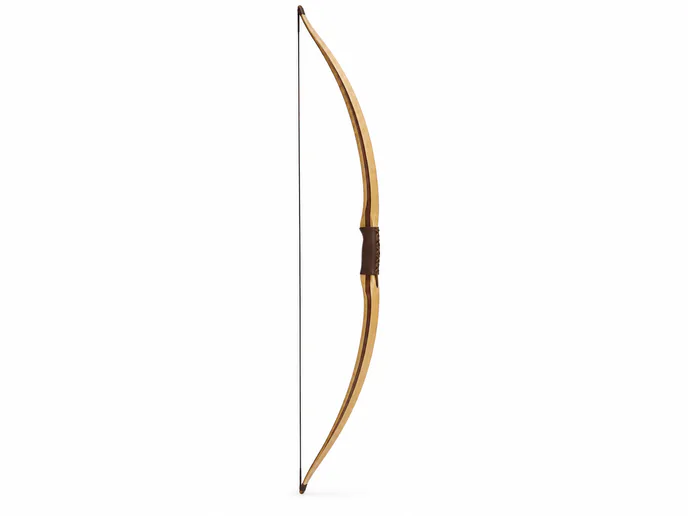
Southwest Archery Ghost Takedown Longbow
A takedown longbow lets you start light and buy heavier limbs later, which is rare at this end of the market.
It comes from Southwest Archery, the maker of the Spyder recurve.
Length
Draw
Type
- A takedown longbow at the budget end
- Limbs from 20 to 50 lb
- Left- or right-hand
- Tops out at 50 lb
A takedown longbow lets you start light and buy heavier limbs later, which is rare at the budget end. The Ghost is a 64″ longbow sold from 20 to 50 lb, in right- or left-hand.
It comes from Southwest Archery, the maker of the Spyder recurve. If the longbow look is what makes you want to shoot, start here.
#4 Galaxy Vega: best hardwood riser for shorter draws
The Vega is a 60″ takedown recurve with an 18″ riser handcrafted from hardwoods, and limbs of black glass over a double maple core. It’s a step up in fit and finish from the budget bows.
At 60″ it’s on the short side, so it suits shorter draws; longer draws should look at Galaxy’s 62″ Ursa. It’s sold by Lancaster Archery, not Amazon, in left- or right-hand with a Flemish string, so check the draw weights on its page.
#5 Hoyt Satori: best ILF upgrade once you’re hooked
Your second bow is a good time to move to ILF, the International Limb Fit standard: any ILF limbs fit any ILF riser, whatever the brand. You keep the riser for years and change only the limbs.
The Satori riser comes in 17″, 19″ or 21″ and uses Hoyt’s Grand Prix (ILF) limb pockets. With Hoyt’s short, medium or long limbs it builds a bow from 58″ to 66″.
Its shelf module lets you fine-tune center shot while still shooting off the shelf, or comes off for an elevated rest. It’s a big investment: buy it once you know you love this.
When you outgrow all of these
Past this point you’re into premium metal risers and custom bows built one at a time. Shoot a lot first; you’ll know what you want.
How to choose a first recurve that fits you
The best way to choose is to shoot a few at a club or an archery shop. If you can, buy your first bow at a shop and get fitted, so your arrows are made for your bow, instead of how I did it. The full method, step by step, is in my guide to choosing a recurve bow. Not sure a recurve is the right bow for you? Take the bow quiz.
Length: match it to your draw
Too long for your draw and you give up a little speed; too short and the bow stacks and gets hard to pull near the end. Use the maker’s chart when there is one. A common rule of thumb for a takedown recurve:
- Draw under 27″: a 60″ bow
- 27″ to 29″: a 62″ bow
- 29″ to 31″: a 64″ bow
- Over 31″: a 66″ bow
Not sure of your draw? The draw length calculator gets you close.
Draw weight: lighter than you think
Start around 25–35 lb at your draw length. Bows are rated at a 28″ draw and gain or lose about 2–3 lb per inch either side, so a “40 lb” bow is closer to 35 lb at a 26″ draw.
My test: pull to your cheekbone and hold for three seconds, long enough to take a good breath. If you can’t, it’s too heavy. The draw weight calculator does the maths.
Takedown or one-piece
A takedown is the easiest first bow: you change limbs as you get stronger, and it packs small. My own first bow is a one-piece, and I love it, but I’d start a beginner on a lighter takedown.
Grip, then everything else
The grip is your only contact with the bow. A good grip helps you hold it the same way every shot, and speed matters much less than people think.
Buying a used recurve: 4 rules that protect you
Used recurves turn up in trad forums and Facebook groups, often well below the new price. Once you know your length and weight, used is a great way to try nicer bows.
- Stick to your specs. A great deal on a bow that’s too heavy or too short is a bow you’ll sell again in three months.
- Pay with buyer protection. When buying from a stranger, the small fee for a protected payment is worth it.
- Know the shorthand. OBO is “or best offer”, TYD is “to your door” (shipping included), and Firm means don’t haggle.
- Be a good trader. Don’t lowball, and don’t say “I’ll take it” unless you will. It’s a small community.
// FAQ
Questions about first recurves
Quick answers on length, draw weight, budget, shops, ILF, longbows and hunting.
What length recurve should I buy?
Match it to your draw length and use the maker’s chart. The Sage is rated for a 28″ draw, and Southwest suggests its 64″ Spyder XL for draws over 30″.
What draw weight should a beginner start with?
Around 25–35 lb at your draw length for most adults, lighter for kids. Pick a weight you can pull to your cheekbone and hold for three seconds.
How much should I spend on my first recurve?
A budget takedown will last for years. Skip the expensive gear at first: as a beginner you won’t appreciate the difference yet. Put the savings toward lessons and arrows matched to your bow.
Recurve or longbow for a beginner?
A takedown recurve. It’s easier to find light limbs for, easier to transport, and most coaching is built around it. Get a longbow later if you love the look.
Should I buy my first bow online or at a shop?
At a shop if you can, even though this page has affiliate links: get fitted and get arrows made for your bow. Online works once you know your draw length, draw weight and arrow spine.
What does ILF mean?
International Limb Fit: a standard limb pocket, so any ILF limbs fit any ILF riser, whatever the brand.
Can I hunt with a beginner recurve?
Many hunters use budget takedowns. Check your state’s minimum draw weight and broadhead rules first, and only hunt once you can place every arrow at your hunting distance.