

- Pick draw weight first: one you can pull to your anchor and hold for three seconds, which is lighter than most beginners expect.
- Match bow length to your draw length, about 66–68″ for a 26–28″ draw on Lancaster Archery’s chart.
- Buy a takedown, not a one-piece: you swap to heavier limbs as you get stronger instead of buying a new bow.
- Choose right- or left-handed by your dominant eye, not just your writing hand.
- Buy at a shop and get fitted, and skip expensive gear until you’ve built up to it.
That heavier recurve online looks like the grow-into-it choice, but a bow you can’t hold at full draw teaches you bad form: my first was 45 lb, and the first time I tried to pull it I got maybe three shots in. 😅
Choose draw weight first, one you can hold at anchor for three seconds (the draw weight calculator helps), then match bow length to your draw, and you’ll spend your first season building form, not fighting your bow. 💪
Recurve draw weight: the choice that makes or breaks your first season
Draw weight is the single most important choice on a first recurve. Too heavy and you can’t reach your anchor, you shake at full draw, and you build habits you’ll have to unlearn.
My first bow was a 45 lb Sanlida Royal X8, and it was too much: I had to train with a resistance band around a door before I could shoot it well.
My advice: get a 40 pounder, or maybe at least a 35, just to get technique down.
For target practice, the Easton Foundations suggest a first recurve in the 10–25 lb range. If you want to hunt later, check your state’s minimum: Pennsylvania, for example, requires at least 35 lb for deer, so see my Pennsylvania bowhunting regulations guide.
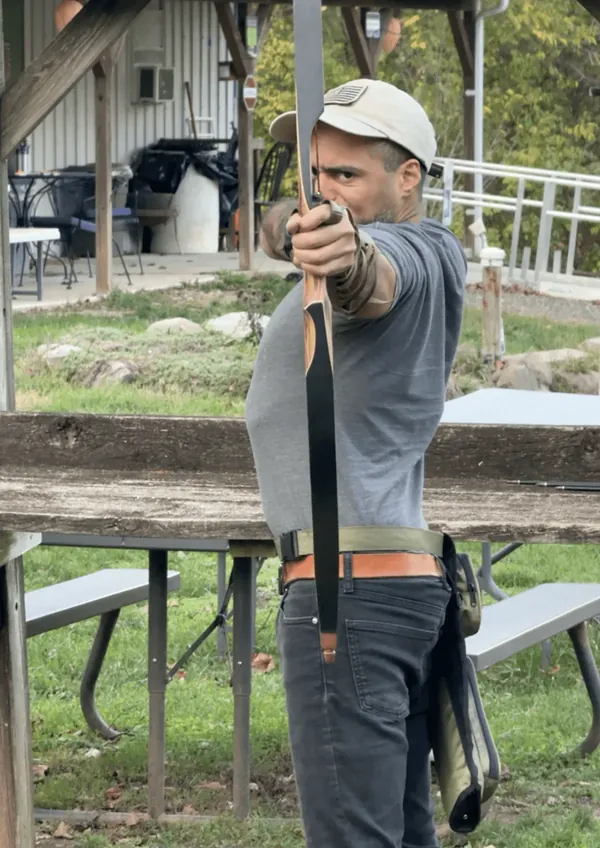
The test I’d use is simple: pull to your anchor and hold for at least three seconds, long enough to take a good breath. If you can’t, go lighter, and try the draw weight calculator for a starting number.
// Free printable
Get the range log I actually use.
Seventeen printable pages: session log, score tracker, a 30-day drill challenge, a bow maintenance card, a first-season checklist and more. Join the monthly email and it lands right away.
What your recurve really pulls: draw weight is marked at 28 inches
The weight printed on recurve limbs is measured at a 28″ draw. Draw shorter and the bow feels lighter; draw longer and it feels heavier, by roughly 2–3 lb per inch on most recurves.
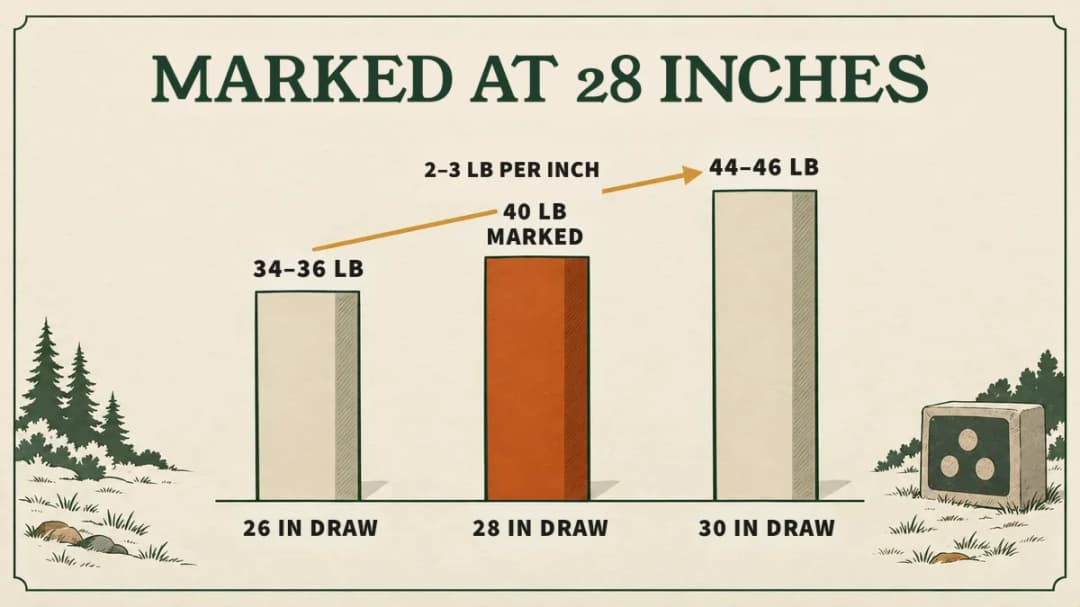
| Marked weight (at 28″) | About at 26″ | About at 27″ | About at 29″ | About at 30″ |
|---|---|---|---|---|
| 30 lb | 24–26 lb | 27–28 lb | 32–33 lb | 34–36 lb |
| 35 lb | 29–31 lb | 32–33 lb | 37–38 lb | 39–41 lb |
| 40 lb | 34–36 lb | 37–38 lb | 42–43 lb | 44–46 lb |
| 45 lb | 39–41 lb | 42–43 lb | 47–48 lb | 49–51 lb |
These are estimates from the 2–3 lb-per-inch rule of thumb, and every bow is a little different. A shop can measure your real weight at your real draw on a bow scale.
Recurve bow length: match it to your draw length
Recurves are sold by overall length, and longer draws need longer bows so the limbs bend smoothly instead of stacking up at full draw. Lancaster Archery’s starting chart looks like this.
| Your draw length | Starting recurve length |
|---|---|
| 22–24″ | 62″ |
| 24–26″ | 64–66″ |
| 26–28″ | 66–68″ |
| 28–30″ | 68–70″ |
| 31″ and up | 70–72″ |
To estimate your draw length, measure your wingspan in inches and divide by 2.5, or use the draw length calculator. Treat the chart as a starting range, not a hard rule, and confirm it at a shop.
Takedown vs one-piece recurve: which is better for beginners?
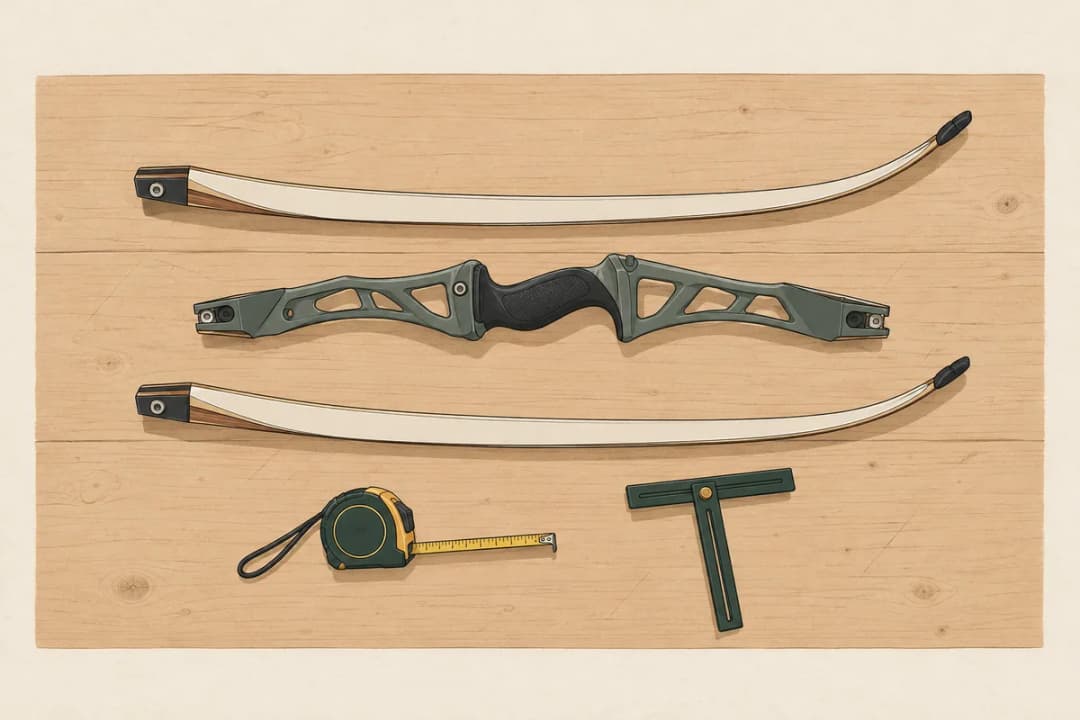
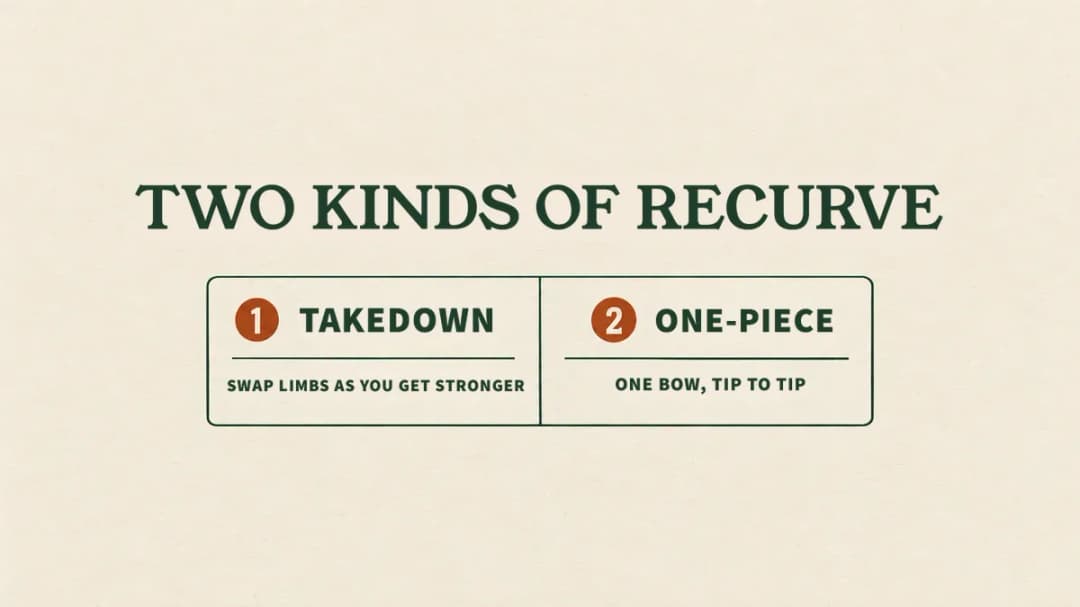
A takedown recurve has limbs that bolt onto the riser (the handle). When you get stronger, you buy a heavier set of limbs instead of a whole new bow, and many takedowns use the ILF (International Limb Fitting) standard, so limbs and risers from different brands fit together.
A one-piece recurve is a single bow from tip to tip. Mine is one, and I love how it looks, but a one-piece is a second bow, not a first: learn on a lower-poundage takedown.
Pros
- Takedown: swap limbs to change draw weight as you get stronger.
- Takedown: breaks down small for travel and storage.
- One-piece: nothing to assemble or tighten, and many are beautiful wood bows.
Cons
- Takedown: more parts to check, and limb bolts must be snug before you shoot.
- One-piece: changing draw weight means buying a new bow.
- One-piece: a long bow to carry and store.
A one-piece still travels fine on a back seat, but if you only buy one bow to learn on, make it a takedown.
That isn’t just my take. The archery coach behind the NUSensei channel, whose video closes this post, lands in the same place:
If all you want is a bow to use, then I recommend the takedown recurves… For someone getting into archery with no guidance, this is the safest choice. It provides the easiest learning curve, and the skills you learn using this bow can carry over to any style of bow you might choose to use later on.
The last part is the one I’d underline. Stance, anchor and release don’t care which bow you learned them on, so a basic takedown is never wasted, even if you end up shooting a longbow or an Olympic recurve.
Right- or left-handed recurve: pick by your dominant eye
A right-handed bow is held in the left hand and drawn with the right. Most coaches match the bow to your dominant eye, because that eye lines up the shot, and eye dominance doesn’t always match your writing hand.
- With both eyes open, hold a thumbs-up at arm’s length over a distant object.
- Close your left eye. If your thumb stays on the object, you’re right-eye dominant.
- Close your right eye instead. If your thumb stays put now, you’re left-eye dominant.
The Easton Foundations note that about two-thirds of people are right-eye dominant. If your eye and hand disagree, buy the bow for your dominant eye, and ask a coach to watch you shoot before you pay.
Where to buy a recurve: get fitted and skip expensive gear
Buy your first recurve at a shop. Mine came by mail, completely taken apart, with arrows that were way too long and flimsy.
I don't recommend necessarily getting a bow online, to be honest, even though I have an affiliate link for a bunch of this stuff. I actually think that you should go to a shop and get it fitted properly.
A shop can measure your draw length, let you feel a few draw weights and cut arrows for your bow. As a beginner, you won’t appreciate expensive gear yet, so a simple, light bow is the better spend.
Not every coach agrees with starting basic. NUSensei argues the other side in the same video:
The reality is that you can skip the basic bows, especially if you’re already learning using club equipment or rented equipment.
He has a point, and it’s in the second half of that sentence: if you’ve already shot club or rental bows for a while and know you’re staying, a better first bow can save you an upgrade. If this is your first bow and you’re learning on your own, start light and simple anyway: your form will change faster than an expensive riser can help it.
If you do shop online, my list of the best recurve bows for beginners sticks to light, takedown-friendly picks. You can also read my honest Sanlida Royal X8 review to see what a heavier one-piece is like.
Not sure a recurve is the right bow for you? Take the bow quiz: it matches you to a bow type and a starting draw weight.
8 checks before you buy your first recurve bow
- Draw weight: can you hold it at anchor for three seconds?
- Weight at your draw: adjust the marked 28″ weight for your real draw length.
- Bow length: does it fit your draw on the chart above?
- Takedown or one-piece: can you change limbs later?
- Handedness: does it match your dominant eye?
- Arrows: are they the right spine and length for this bow?
- What’s included: string, arrow rest, stringer, and any assembly needed.
- Your goal: backyard target practice, or hunting with a legal minimum weight?
Once a bow passes all eight checks, one more thing decides it, and NUSensei puts it best:
If it looks good and it feels good, buy it… Buy the bow that you want to use, not what someone else tells you to get.
I agree, as long as the checks come first. A bow you love looking at gets shot more, and practice beats a slightly better spec every time. Just don’t let looks talk you past draw weight: a gorgeous bow that’s too heavy stays in the closet.
Once it’s home, read up on carbon vs aluminum arrows and your archery stance. My recurve archery for beginners guide takes you from your first shot onward.
// FAQ
Frequently asked questions
Quick answers to the questions readers ask most.
What draw weight recurve should a beginner get?
One you can pull to your anchor and hold for three seconds. For target practice that’s often 10–25 lb; my advice for an adult is a 40 lb bow, or at least a 35, to get technique down.
What size recurve bow do I need?
Go by draw length: roughly 64–66″ for a 24–26″ draw, 66–68″ for 26–28″ and 68–70″ for 28–30″. Confirm it with a shop fitting.
Is a takedown recurve better for beginners?
Yes. You can swap to heavier limbs as you get stronger instead of buying a new bow.
Should I buy my first recurve bow online?
Not if there’s a shop you can get to. A shop can confirm your draw length and weight and cut arrows to match.
How do I know if my recurve is too heavy?
If you can’t reach your anchor, you shake at full draw, or you’re worn out after a few shots, it’s too heavy. Drop the weight and build up.
Can you hunt with a beginner recurve?
Only if it meets your state’s minimum draw weight, and many states set one. Pennsylvania, for example, requires at least 35 lb for deer and bear.
Final thoughts
Choosing a recurve bow comes down to one honest question: can you control it? Pick draw weight first, then length by your draw, a takedown if you want room to grow, and a shop fitting if you can get one.
Start lighter than your ego wants and you’ll be grouping arrows while others are still fighting their bows. Track your progress in my free range log as you build up.