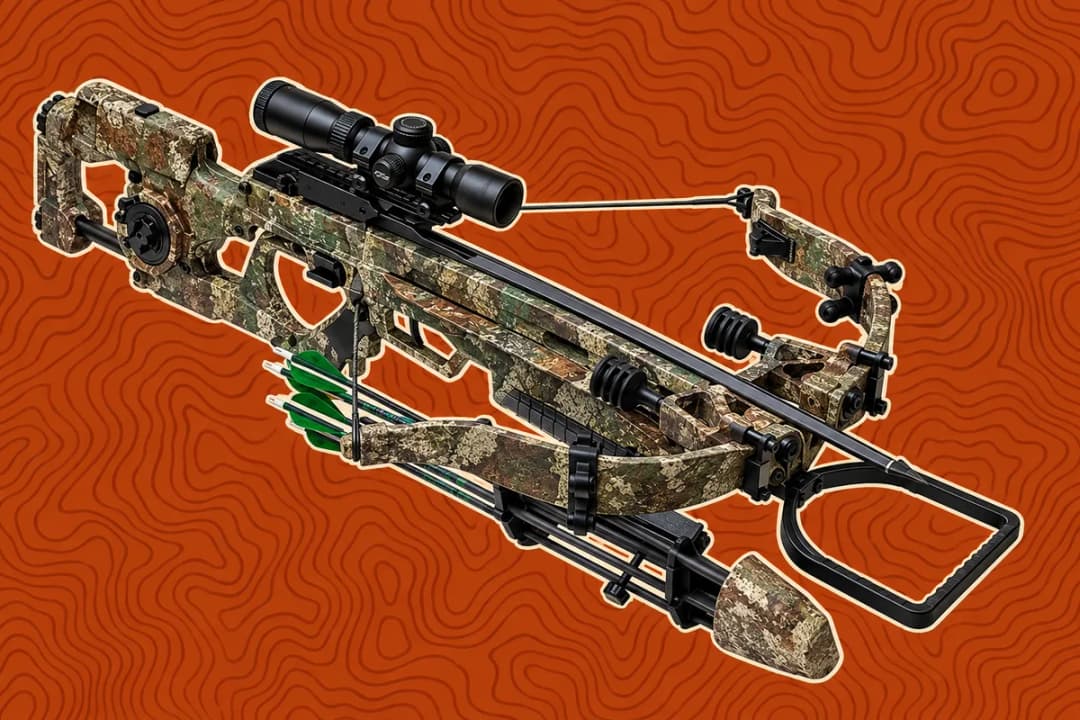


- My top pick is the Excalibur Mag 340, a light, simple recurve rated at 340 fps.
- Recurve crossbows have no cams or cables, so there’s less to break and you can restring one without a bow press.
- The trade-off is a wider bow when cocked and a heavier draw weight for the same speed.
- Check draw weight, speed, weight and the included cocking aid before you buy.
No cam timing, no bow press, nothing fussy to fix in the woods. That’s the whole pitch, and it’s why a recurve crossbow is the simple answer if you want one that just works on opening morning. 🙂
My top pick is the Excalibur Mag 340, with the Assassin 400 TD for more speed and the Barnett Wildcat as the budget start; compare every draw style in my best crossbows guide.
What is a recurve crossbow: simple limbs, fewer parts
A recurve crossbow uses limbs whose tips curve away from you, the same shape as a recurve bow, mounted crosswise on a stock. The string pulls directly on the limbs, with no cams or cables in between.
I haven’t shot a crossbow. So the specs below come from the makers’ sheets and listings. Here’s why hunters pick a recurve crossbow:
- Fewer moving parts, so less to inspect, tune or break
- You can change the string at home or in camp without a bow press
- Often lighter and cheaper than a compound crossbow of similar quality
- Nothing to time or tune, which suits a first crossbow

// Free printable
Get the range log I actually use.
Seventeen printable pages: session log, score tracker, a 30-day drill challenge, a bow maintenance card, a first-season checklist and more. Join the monthly email and it lands right away.
Best recurve crossbows compared: specs side by side
The three picks, on paper. Speeds are the makers’ ratings, which depend on the bolt weight used for the test.
| Crossbow | Award | Rated speed | Draw weight | Power stroke | Weight |
|---|---|---|---|---|---|
| Excalibur Mag 340 | Best mid-level choice | Up to 340 fps | 270 lb | 13″ | 5.5 lb |
| Excalibur Assassin 400 TD | Best for experts | Up to 400 fps (388 with S.D.S.) | 325 lb | 15″ | 7.9 lb |
| Barnett Wildcat | Best for beginners | 260 fps (380-grain bolt) | 195 lb | 12″ | 4.8 lb |
Affiliate links: I may earn a commission at no extra cost to you.
Top recurve crossbows for hunting: my 3 picks
None of these is scored, because I havent shot them. Each pick lists what the maker says and what to check when it arrives.
1. Best mid-level choice: Excalibur Mag 340

The Mag 340 is a compact recurve rated at up to 340 fps, and the bow alone weighs about 5.5 lb. Its draw weight is listed at 270 lb, with a 13″ power stroke.
Packages typically include a Dead Zone scope, a 4-bolt quiver, three Quill bolts, R.E.D.S. string suppressors, the Guardian anti-dry-fire system and a rope cocking aid that Excalibur says cuts the felt draw weight by up to 50%. Note that some stores sell it as the Micro Mag 340.
Pros
- Light for a full-size hunting crossbow
- Comes ready to hunt with scope, quiver and cocking aid
- Anti-dry-fire system and string suppressors included
Cons
- 270 lb draw weight is hard to cock without the rope aid
- Buyers report parts arriving scratched, so inspect it on arrival
Who it’s for: a hunter who wants a light, simple crossbow for stand or blind hunting. Check the minimum bolt weight in the manual and buy bolts to match.
2. Best for experts: Excalibur Assassin 400 TD

The Assassin 400 TD is Excalibur’s faster recurve: up to 400 fps from a 325 lb draw weight and a 15″ power stroke. It weighs about 7.9 lb, and Excalibur rates it at 388 fps with its S.D.S. sound-deadening system fitted.
The “TD” means takedown: the Quick-Loc system lets you separate the bow for transport. It also has a built-in Charger crank (about 14 lb of cocking force), a two-stage Pro-Shot trigger and a Tru-Fit stock that adjusts from 12″ to 15″ length of pull.
Pros
- The fastest of the three picks
- Built-in crank makes a heavy draw weight manageable
- Takedown design fits a smaller case
Cons
- Heaviest of the three to carry
- Buyers mention a thin assembly manual and loose rail screws, so check every screw
Who it’s for: an experienced crossbow hunter who wants recurve simplicity with more speed. Use blue thread locker only where the manual allows it.
3. Best for beginners: Barnett Wildcat

The Barnett Wildcat is the lightest and slowest pick: Barnett rated it at 260 fps with a 380-grain bolt from a 195 lb draw weight. That works out to about 57 ft-lb of kinetic energy, and it weighs about 4.8 lb with a 4×32 multi-reticle scope in the package.
Barnett later released the Wildcat CRX, rated at 280 fps with a 380-grain bolt and about 6.1 lb, so check which version a listing is selling. The quiver placement and the manual draw some complaints from buyers.
Pros
- Lowest draw weight here, so it’s the easiest to cock
- Very light to carry
- Ready-to-hunt package
Cons
- Slowest of the three, so keep your shots close
- Check whether a cocking aid is in the box
- Instructions are basic
Who it’s for: a first-time crossbow hunter on a tight budget who will shoot at modest distances. Practice on one of the best crossbow targets before the season.
How to choose a recurve crossbow: 6 things to check
Every crossbow listing throws numbers at you. These six decide whether you’ll enjoy hunting with it:
- Draw weight: the force to pull the string to the latch; recurves need more of it than compounds for the same speed.
- Cocking aid: a rope cocker roughly halves the effort, and a crank does even more.
- Bow weight: you’ll carry it and hold it on target, so lighter is easier.
- Speed (fps): faster flattens the trajectory, but bolt weight and shot placement matter more.
- Noise: string suppressors and limb dampeners help a recurve run quieter.
- Safety features: look for an anti-dry-fire mechanism and a finger guard.
Do’s and don’ts of choosing a recurve crossbow
| Do | Don’t |
|---|---|
| Match the draw weight to your strength and cocking aid | Skip the anti-dry-fire and finger guard features |
| Think about where you hunt: blind, stand or stalking | Buy on speed alone |
| Check the warranty and who services the brand near you | Shoot bolts lighter than the manual’s minimum |
Recurve crossbow pros and cons vs compound crossbows
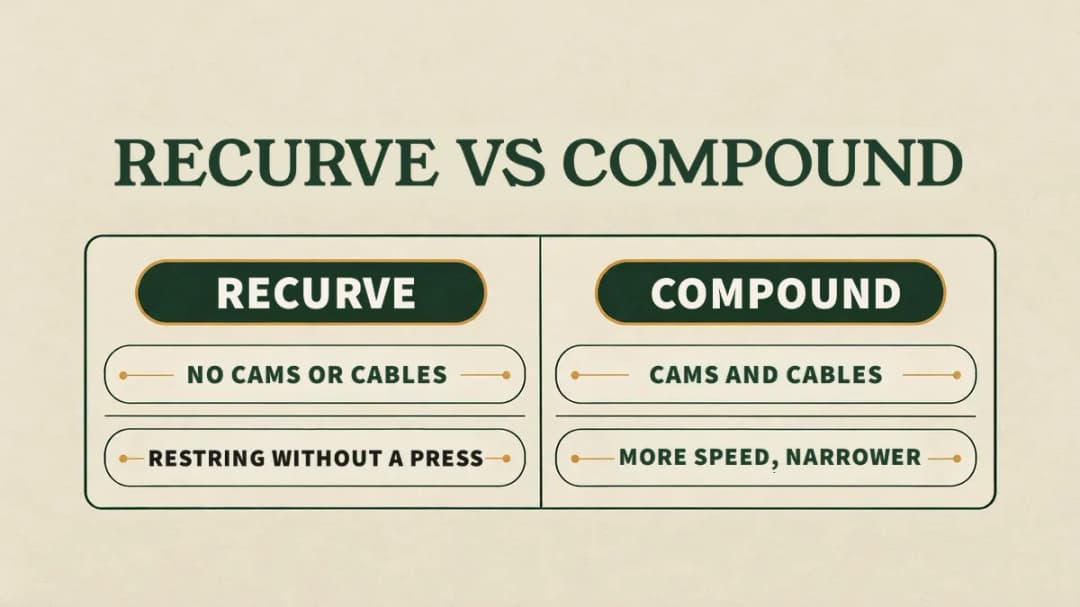
A recurve crossbow trades some speed and compactness for simplicity. Here’s how it compares to a cam-driven compound crossbow.
Pros
- Simple design with no cams or cables
- Restring without a bow press
- Often lighter and cheaper than a comparable compound
Cons
- Wider when cocked, which matters in a tight blind
- Usually slower and louder than a compound
- Higher draw weight to cock for the same speed
The no-press point is the big one, and the video below shows it. Dan Wallace of Excalibur, a company that builds recurve crossbows, starts with the problem every hunter runs into sooner or later:
If you got a compound crossbow, you’re going to have to head to the dealer and have that bow put in a bow press in order to get new strings put on it. But with the Excalibur you don’t have to go through all that trouble. All you got to have is the stringing aid right here.
He’s a maker, so he’s selling his own design, but the clip backs him up: the whole string swap takes about a minute. The catch is that you need the stringing aid and a spare string with you, and you’re letting a heavy draw weight down by hand. Do your first swap at home with the manual open, not in the woods on opening morning.
For a wider look at brands and models, see my guide to the best crossbows.
Recurve crossbow tips for better shots
A simple crossbow still rewards good habits. Make these part of every session:
- Use a steady rest: shooting sticks or a blind window give you a solid hold.
- Follow through: keep your eye on the target until the bolt lands.
- Wax the string: do it as often as the manual says, and inspect it for fraying.
- Know your range: sight in at the distances you’ll actually shoot.
// FAQ
Frequently asked questions
Quick answers to the questions readers ask most.
What’s the difference between a recurve and a compound crossbow?
A recurve crossbow’s string pulls directly on curved limbs. A compound crossbow adds cams and cables, which make it narrower and usually faster but more complex.
Are recurve crossbows good for beginners?
Yes, if you can cock the draw weight comfortably with the included aid. They’re simple to understand and maintain.
Can you restring a recurve crossbow without a bow press?
Yes, that’s one of the main reasons people choose them. Use the stringer the maker recommends and follow the manual.
How often should you replace a recurve crossbow string?
Replace it when you see fraying, broken strands or worn serving, or at the interval in your manual. Waxing it regularly makes it last longer.
Can you use a recurve crossbow for target shooting?
Yes. It’s a good way to practice before the season, as long as your target is rated for crossbow bolts.

Final thoughts
If you want a crossbow that’s simple to own, buy a recurve. The Excalibur Mag 340 is my top pick, the Assassin 400 TD adds speed, and the Barnett Wildcat gets you started for less.
Whichever you choose, cock it in a shop first and buy bolts at or above the manual’s minimum. Then log your first sessions in the free range log so you can see your groups tighten.
