

- The G5 Montec is the pick for a simple, one-piece fixed blade you can resharpen.
- The G5 Megameat is a mechanical head with a 2″ cut for hunters who want the widest wound channel.
- The Grim Reaper Carni-FOUR opens four staggered blades, so confirm it’s rated for your crossbow before you buy.
- Match the grain weight to what your crossbow maker recommends, which is usually 100 or 125 grains (Excalibur builds around 150).
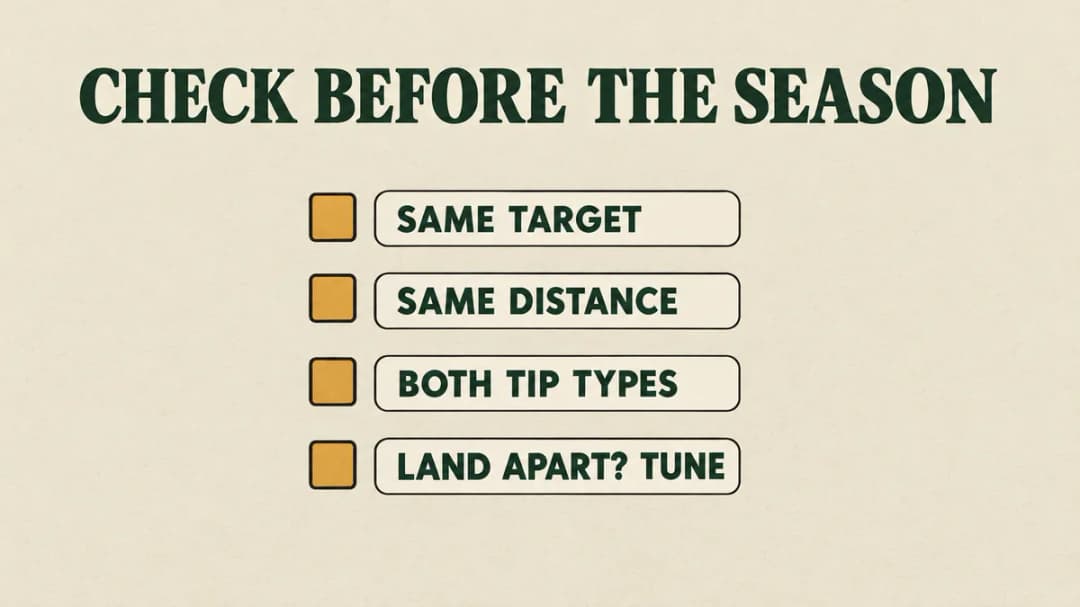
- Shoot your broadheads before the season, because they don’t always land where your field points do.
short on time? start here
The top picks
Verdict: a one-piece fixed blade like the G5 Montec. Want a bigger cut? The mechanical G5 Megameat.
That wall of packs promising a “devastating” cut hides the one thing that matters: a head that flies off your field-point group can mean a wounded deer. 😟 Pair yours with the right crossbow bolts and sight in again before the season.
Best crossbow broadheads: 3 picks and who each one fits
I haven’t shot a crossbow or hunted with any of these heads. These picks come from the makers’ specs and what other hunters report, not from my own field tests, so there are no scores here.
My goal is a deer or a turkey taken with my own bow so any broadhead I recommend has to do its job the first time.
My bow hunting goal is definitely to find a deer or a turkey or some other kind of animal, shoot it with my own bow and take it home and eat it. That's a big goal of mine.
Here’s how the three picks compare on paper. Every spec below is from retailer and maker listings, so check the pack you buy, because head’s come in several weights.
| Pick | Type | Cutting diameter | Crossbow weights listed | Upkeep |
|---|---|---|---|---|
| G5 Outdoors Montec | Fixed, one-piece steel, 3 blades | About 1–1-1/8″ (varies by version) | 100 and 125 grains | Resharpen the blades |
| G5 Outdoors Megameat | Mechanical, snap-lock collar | 2″ | 100 grains (MM102) and 125 grains (MM103) | Replaceable blades and collars |
| Grim Reaper Carni-FOUR | Mechanical, 4 staggered blades | 1-1/2″ × 1-1/4″ | 100 grains listed (check the pack) | Snap Cup holds blades closed; no O-rings or bands |
Affiliate links: I may earn a commission at no extra cost to you.
1. Best fixed blade: G5 Outdoors Montec
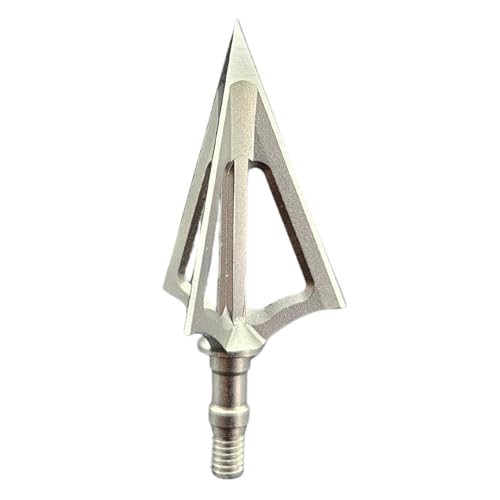
G5 Montec
G5 Montec 1-1/16-Inch Cut Broadheads, 100 Grain, 3-Pack
by G5 Outdoors
Affiliate link: I may earn a commission, at no cost to you.
Key features
- One-piece steel fixed-blade broadhead, 3 per pack
- 1–1⅛″ cut; this listing is 100 grain (85 and 125 also sold)
- Spin-tested; still check it hits where your field points do
- Keep the blades covered in a hooded quiver until you load
Specs
- Brand
- G5 Outdoors
- Model
- 112
- Size
- 100 Gra"
- Color
- 100 Grain
- Length
- 1.968503935 inches
- Weight
- 0.06875 pounds
The Montec is machined from a single piece of steel, with three blades and no moving parts to fail. G5 sells crossbow versions at 100 and 125 grains. Listings give the cutting diameter as anywhere from 1″ to 1-1/8″ depending on the version so check the pack.
Because nothing has to open, a fixed blade has fewer ways to go wrong on a deer’s shoulder or a quartering shot. The trade-off is that you sharpen it yourself instead of swapping in fresh blades.
Fixed blades have one real weakness, and Brian Zabitsky of TenPoint Crossbows, in the tech tip further down this post, names it and gives a rule for picking one. Listen for the blade count and the width:
Higher profile blades can make the broadhead less aerodynamic and can often lead to planing issues… So if you want to shoot a fixed blade broadhead, I recommend using one with three blades instead of four. I also recommend that you choose one with a cutting diameter between seven eighths of an inch and one and a quarter inch.
Planing is when the blades catch the air like little wings and steer the bolt off your line. The Montec fits his rule: three blades and about 1″ to 1-1/8″ of cut. The catch is the low end of his range: 7/8″ is also the legal minimum width for big game in some states, so check yours before you go narrower.
Who it’s for: a first-season hunter who wants one reliable head for deer and doesn’t want to fuss with collars or bands. Hunters who reach for a good crossbow scope and a simple setup tend to like the Montec for the same reason.
Pros
- One-piece steel build with no parts to replace
- Blades can be resharpened
- Hunters often report it groups close to field points
- Crossbow versions in 100 and 125 grains
Cons
- Sold in 3-packs
- Smaller cut than the mechanical picks
- Sharpening takes some practice
2. Best mechanical: G5 Outdoors Megameat

The Megameat is a mechanical (expandable) broadhead: a snap-lock collar holds the blades closed in flight, and they open to a 2″ cut on impact. The crossbow models come in 100 and 125 grains, and the blades and collars can be replaced.
A wide cut means a bigger wound channel and usually a better blood trail, which is why many deer hunters like expandables. Some reviewers say the blades can break on very hard hits, so carry spares.
Speed is the other thing to watch with a mechanical. Zabitsky explains what goes wrong with a front-deploy head, the kind whose blades are held shut by springs, collars or O-rings, when a fast crossbow is behind it:
If the blades open while it’s in flight, the arrow will plane and veer off course, resulting in an inaccurate shot. This can happen if your arrow travels faster than 350 feet per second.
That’s why I keep saying check that a mechanical is rated for your crossbow’s speed. Plenty of new crossbows shoot faster than 350 fps, so look up your bow’s rated speed and the head’s limit before you buy, and shoot it at the range before you trust it on a deer.
Who it’s for: a hunter with a fast, well-tuned crossbow who wants the widest cut and is fine replacing blades after a shot.
Pros
- 2″ cutting diameter once open
- Replaceable blades and collars
- Crossbow-specific 100 and 125 grain models
Cons
- Some reviewers report broken blades on hard impacts
- More moving parts than a fixed blade
- Check your state’s rules, since a few places limit mechanical heads
3. Best for long distance: Grim Reaper Carni-FOUR

The Carni-FOUR is a four-blade mechanical with two 1-1/2″ blades and two 1-1/4″ blades that open in sequence. The longer pair opens first and releases the shorter pair (about 2.75″ of total cut), and a Snap Cup holds everything closed without O-rings or bands.
I list it as the long-distance pick for its compact closed profile: a small head in flight is less likely to drift. Listings disagree on whether every version is approved for crossbows, so check the package or ask Grim Reaper before you put one on a bolt.
Who it’s for: a hunter shooting heavier bolts who wants a large cut and has confirmed the head is rated for their crossbow’s speed.
Pros
- Four blades for a large, square-shaped cut
- Staggered opening design
- No O-rings or rubber bands to replace
Cons
- Some listings say compound bows only, so confirm crossbow use
- Can be hard to find in stock
- A big cut needs good shot placement to work
How to choose crossbow broadheads: 5 checks before you buy
A broadhead is the part of your setup that actually touches the animal. Broadheads kill by cutting blood vessels and causing heavy blood loss, not by the high-energy tissue damage of a bullet, so sharpness and flight matter more than looks.
- Your game: deer need a sharp, sturdy head; elk and bigger animals call for tougher builds and heavier bolts.
- Grain weight: start with what your crossbow maker recommends. TenPoint and Ravin design their bolts around a 100-grain head, while Excalibur’s own heads are 150 grains.
- Fixed or mechanical: fixed blades are simpler and stronger; mechanicals cut wider but have more parts.
- Cutting diameter: a wider cut does more damage but can cost penetration, so balance it with your crossbow’s energy.
- Build quality: one-piece steel heads and replaceable stainless blades hold up best on bone.
Your bolts matter as much as the head on the front. A head is only as accurate as the bolt behind it, so pair it with straight, matched bolts and store everything in a case that protects the blades.
Fixed vs mechanical broadheads: the do’s and don’ts
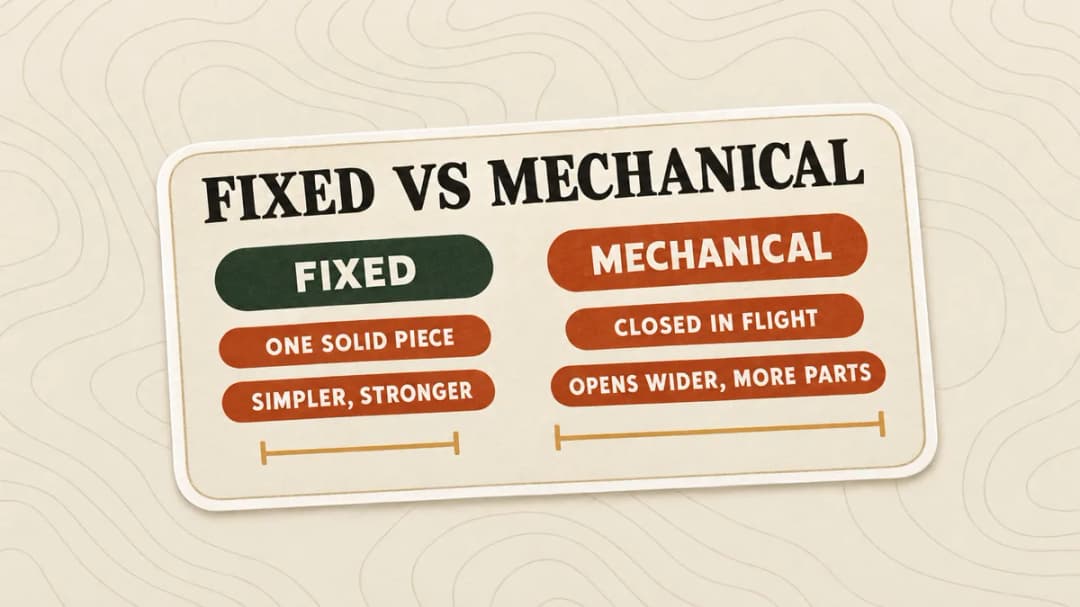
A fixed blade is one solid piece; a mechanical flies with its blades closed and opens on impact for a wider cut, with more parts that can fail. The habits below apply to both.
Do
- Do test your broadheads at the range before the season.
- Do match the head weight to your crossbow maker’s recommendation.
- Do pick a head built for the game you’re hunting.
- Do check that a mechanical is rated for crossbows.
Don’t
- Don't assume they hit exactly where your field points do.
- Don't mix grain weights in your quiver.
- Don't choose on looks or packaging claims alone.
- Don't forget your state’s broadhead rules.
A fixed blade is the safer bet for your first season. Move to a mechanical once your crossbow is tuned and you’ve seen how it flies on a broadhead target.
// Free printable
Get the range log I actually use.
Seventeen printable pages: session log, score tracker, a 30-day drill challenge, a bow maintenance card, a first-season checklist and more. Join the monthly email and it lands right away.
Broadhead tips: tune, sharpen and store them safely
Buying the right head is half the job. The other half is keeping it sharp, tuned and covered.
- Practice with what you hunt: shoot your broadheads (or practice versions) and your field points at the same target from the same distance; if the broadheads group somewhere else, re-sight or tune.
- Keep them sharp: a dull blade wounds instead of kills, so sharpen or replace blades after every shot.
- Spin-test them: a wobble when you spin the bolt means the head isn’t straight on the shaft.
- Know your crossbow: a reverse draw, a recurve and a compound crossbow each have their own speed and recommended head weight.
- Carry them covered: a quiver with a hood keeps blades sharp and fingers safe.
// FAQ
Frequently asked questions
Quick answers to the questions readers ask most.
How often should I replace my broadheads?
Check every head after each shot. Replace or resharpen any blade that’s dull, chipped or bent, and retire a head with a bent ferrule.
What grain broadhead should I use on a crossbow?
Most crossbow makers recommend 100 or 125 grains, though Excalibur builds around 150. Use your crossbow manual’s number, then confirm accuracy at the range.
Do broadheads fly the same as field points?
Not always. Shoot both at the same target, and if the broadheads group somewhere else, re-sight with broadheads or tune your setup.
Can I use the same broadheads for different game?
Yes, as long as the head suits the biggest, toughest animal you’ll hunt. A head built for elk also works on deer, but not always the other way round.
Are fixed blades better for beginners?
Yes. A fixed blade has no parts that need to open, so there’s less to go wrong. Simple and sharp beats complex, especially before you trust your shot placement.

Final thoughts
If you only buy one pack this season, make it a sharp, one-piece fixed blade like the Montec, and test it before opening day. Move to a mechanical once your crossbow is tuned and you trust your shot placement.
The best broadhead is the one you’ve practiced with. If you want a simple way to track those practice sessions, grab the free range log.
