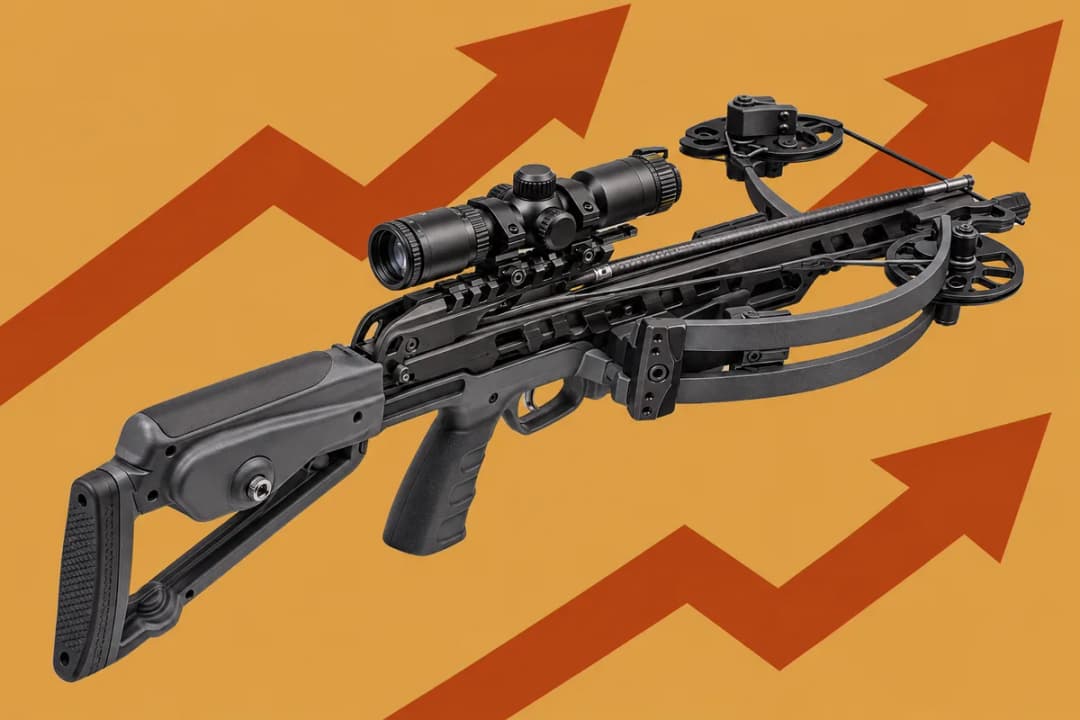


- My top pick is the TenPoint Siege RS410: 410 fps from a body just 26.5″ long.
- Reverse-draw limbs sit back toward your hands, so you get a longer power stroke in a shorter crossbow.
- That layout puts the weight near your grip, which makes the bow easier to hold steady.
- Expect to pay more, and check the bolt weight the maker requires before you shoot.
short on time? start here
The top picks
Quieter, better balanced, easier to hold: that’s the forum pitch for reverse-draw crossbows, and most of it is true. 😊
A reverse-draw is worth it if you want a compact, balanced bow, and the TenPoint Siege RS410 is my top pick. Not sure about the layout yet? Compare all the types of crossbows first, then see which of the three below fits your hunt.
What a reverse-draw crossbow is and why the design shoots differently
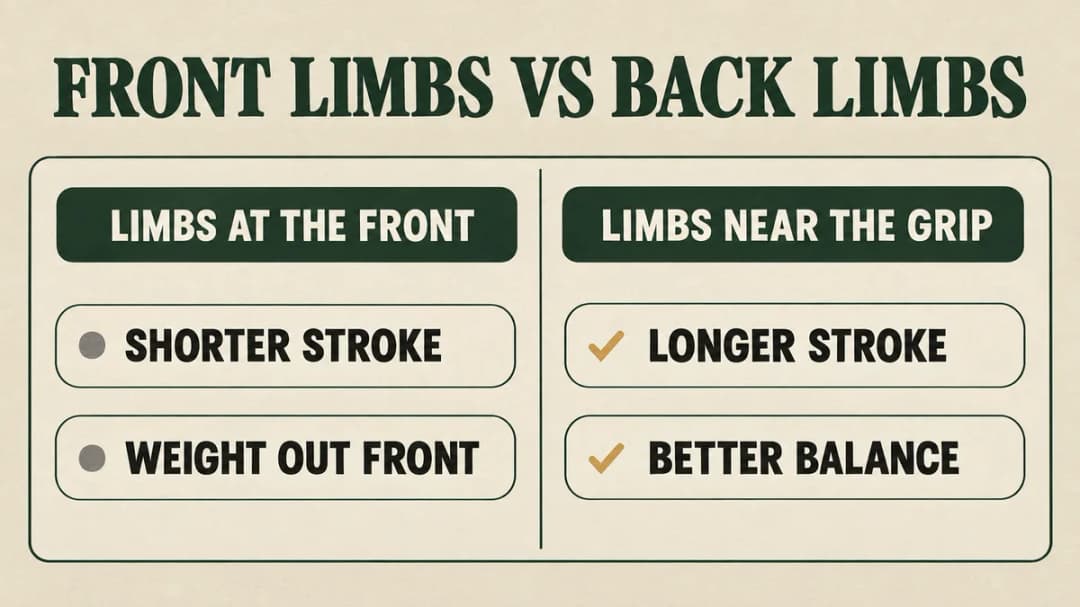
On a regular (forward-draw) crossbow, the limbs sit at the front and the string is drawn back toward you. On a reverse-draw crossbow, the limbs face backward and sit closer to your hands, so the string starts near the front of the rail.
That gives three real changes:
- Longer power stroke: the string pushes the bolt over more distance, so the bow can make speed without being longer or heavier to draw.
- Better balance: the heavy parts sit near the grip instead of out at the front.
- Compact build: you get that stroke in a short, narrow body that swings easily in a blind or treestand.
Makers also pitch reverse-draw bows as quieter with less vibration. Treat that as a claim to check in reviews of the exact model, because noise depends on the whole bow, not just the layout.
The hunter behind the Death by Bunjie channel, who has shot both layouts for many seasons, thinks the shot itself feels different, because the limbs move outward and stop instead of slamming forward. His video is further down this post:
It’s not as jarring. It’s a much smoother shooting experience than you might experience from your traditional forward draw style crossbows.
That’s an experienced shooter’s impression and it fits how the limbs move. I’d still check the exact model before you count on it, because suppressors, limbs and bolts change the feel and the sound.
| Feature | Forward-draw crossbow | Reverse-draw crossbow |
|---|---|---|
| Limb position | Front of the rail, facing forward | Closer to the grip, facing back |
| Power stroke | Shorter for the same length | Longer for the same length (13.5″ on the Siege RS410, 15.5″ on the RDX 400) |
| Balance | Often front-heavy | Weight near your hands |
| Choice of models | Most crossbows on the market | Fewer models (mainly TenPoint’s Nitro and RS lines and Wicked Ridge’s RDX) |
Balance is the change you feel first. And he describes it well:
You take the riser from the fore end of the crossbow, move it all the way back down here above your trigger hand… You can hold the crossbow with one hand and it doesn’t really want to move around. It’s not front end heavy.
That matters more than the spec sheet sugests. A bow that doesn’t pull your arm down is a bow you can hold still while a deer takes its last steps. Lift one in a shop and you’ll feel it in seconds.
The best reverse-draw crossbows for hunters
Honest note first: I haven’t shot these crossbows myself.
So these picks come from the makers’ spec sheets and retailer listings, not from my range. No scores, just the facts and what to check.
Affiliate links: I may earn a commission at no extra cost to you.
1. Best premium: TenPoint Siege RS410

TenPoint Siege RS410
TenPoint Siege RS410 Crossbow Package ACUslide Graphite Grey
by TenPoint
Affiliate link: I may earn a commission, at no cost to you.
Key features
- Reverse-draw crossbow: 410 fps, 26.5″ long, 7.5″ wide cocked
- Built-in ACUslide crank cocks it and de-cocks it without a shot
- 13.5″ power stroke and a 3.5 lb two-stage trigger; about 7.5 lb
- Made for TenPoint bolts: check the length, nock and weight
Specs
- Brand
- TenPoint
- Model
- CB21012-1819
- Color
- Graphite
- Length
- 1 inches
- Weight
- 16.8 pounds
The Siege RS410 is TenPoint’s compact reverse-draw: rated at 410 fps, 26.5″ long without the foot stirrup, 7.5″ wide cocked and about 7.5 lb. It has a 13.5″ power stroke, a 3.5 lb two-stage trigger and TenPoint’s built-in ACUslide crank, which cocks and safely de-cocks the bow.
Pros
- Very short and narrow for a 410 fps crossbow
- Built-in crank cocks and de-cocks without a rope or a dry shot
- Sold as a package with a scope and bolts
Cons
- Premium crossbow at a premium cost
- Made for TenPoint bolts, so check bolt compatibility
- Still about 7.5 lb to carry
Who it’s for: you hunt from a blind or treestand and want a short, balanced, fast bow with an easy, safe way to de-cock.
2. Best pistol crossbow: Ballista BAT Reverse

Ballista BAT Reverse
BALLISTA BAT Reverse Draw Mini Compound Crossbow, 340 FPS, 150 lb | 16 x 5 in, about 3 lb frame fits a 30 L backpack; built-in cocking assist uses about 50 lb for target, bowfishing, hunting
by BALLISTA
Affiliate link: I may earn a commission, at no cost to you.
Key features
- Pistol-size reverse-draw crossbow with 150 lb limbs
- Speed runs about 340–420 fps by version: read the one you buy
- Small enough for a backpack or a tight blind
- Check your state’s rules before hunting with a pistol crossbow
Specs
- Brand
- BALLISTA
- Model
- BAT Reverse
- Size
- 16 x 5"
- Color
- Black
- Length
- 16 inches
- Weight
- 3 pounds
The BAT Reverse is a mini, pistol-size reverse-draw crossbow with 150 lb limbs. Ballista sells several versions (with and without a stock), and the speed ratings vary by version and listing, from about 340 to 420 fps, so read the exact one you’re buying.
Pros
- Small enough to fit in a backpack or a tight blind
- Light compared with a full-size crossbow
- Fun for target practice
Cons
- Harder to hold steady than a full-length crossbow
- Specs differ between versions and sellers
- Check your state’s rules before using a pistol crossbow for hunting
Who it’s for: you want a compact crossbow for backyard targets or tight spaces, and you’re fine with less steadiness than a full-size bow.
3. Best mid-range: Wicked Ridge RDX 400

Wicked Ridge is TenPoint’s more affordable brand, and the RDX 400 is its reverse-draw: rated at 400 fps with a 15.5″ power stroke, about 32.25″ long, 9″ wide cocked and around 7.6 lb. It was sold in packages with an ACUdraw cocking system and a multi-line scope, but retailers now list it as discontinued, so you may only find it used or certified pre-owned.
Pros
- Long power stroke for its class
- Backed by TenPoint’s customer service
- ACUdraw versions make cocking easy
Cons
- Discontinued: harder to find new
- Longer and wider than the Siege
- Strings and cables need regular care, like any 400 fps bow
Who it’s for: you want TenPoint-style reverse-draw design for less, and you don’t mind buying certified pre-owned.
How to choose a reverse-draw crossbow: 5 things to check
Use these checks on any reverse-draw model, including ones not listed here. Balance and fit matter more than the last 10 fps.
- Power stroke: a longer stroke gives speed without a punishing draw weight.
- Balance and length: hold it if you can; it should sit steady at your shoulder.
- Cocking system: a built-in crank or cocking aid makes cocking even and lets you de-cock without shooting.
- Bolt requirements: use the bolt length, nock and minimum weight in the manual.
- Your state’s rules: some states set a minimum crossbow draw weight or limit pistol crossbows.
// Free printable
Get the range log I actually use.
Seventeen printable pages: session log, score tracker, a 30-day drill challenge, a bow maintenance card, a first-season checklist and more. Join the monthly email and it lands right away.
Reverse-draw crossbow pros and cons: is the design worth it for you?
The design solves real problems, but it isn’t free. Weigh the balance and compact size against the cost, and compare with recurve and compound crossbows.
There’s one more point in the design’s favour that rarely makes the box. A longer power stroke can reach the same speed with a lower draw weight, and he explains why that matters:
The more stress you put on these limbs, it makes sense that at some point they’re going to break.
Fair point, with a catch: not every reverse-draw runs a low draw weight, so read the number for the model you’re looking at. A lower one is also easier on you when the bow is cocked and you’re working near the string.
Pros
- Longer power stroke in a shorter crossbow
- Weight sits near your hands for a steadier hold
- Compact width for blinds and treestands
- Fast speed ratings without extreme draw weights
Cons
- Usually costs more than a forward-draw crossbow
- Fewer models to choose from
- Finding a case that fits can take some measuring
Need somewhere to put it? See the best crossbow cases, and measure the bow cocked and uncocked first.
Reverse-draw crossbow tips for your first season
Whatever bow you choose, these habits help it shoot well from day one. Spend more time with the bow than with the spec sheet.
- Read the manual for your exact model; cocking and de-cocking steps differ.
- Sight in your scope before the season, then check it again after travel.
- Practice on a crossbow target rated for your bow’s speed.
- Pick good broadheads and matching bolts, then check that your broadheads hit with your field points.
- Carry spare bolts in a quiver made for your bow.
- Keep a log of each session so you can see what’s improving.
If you learn better by watching, this video goes over reverse-draw crossbows.
// FAQ
Frequently asked questions
Quick answers to the questions readers ask most.
What is the difference between a reverse-draw and a forward-draw crossbow?
On a reverse-draw crossbow the limbs face back toward the shooter, so the string travels farther before it releases the bolt. You get a longer power stroke and better balance in a shorter bow.
Are reverse-draw crossbows good for beginners?
Yes, if the cost fits. The balance makes them easier to hold steady, but learn your model’s cocking and de-cocking steps before you shoot.
Are reverse-draw crossbows quieter?
Makers say so, and the design can reduce vibration. Check reviews of the exact model, since string suppressors, limbs and bolts affect noise too.
What draw weight do I need for deer?
Any modern hunting crossbow makes far more energy than deer need. The number that matters is your state’s legal minimum, if it has one: West Virginia, for example, requires 125 lb.
How do I maintain a reverse-draw crossbow?
Wax the string and lube the rail as your manual says, check strings, cables and screws before each session, and store the bow uncocked. TenPoint recommends replacing the string and cables about every two years.
Final thoughts
If you hunt from a blind or treestand, buy a reverse-draw: it’s the short, balanced layout. The Siege RS410 is the premium choice, the BAT Reverse is the small one, and the RDX 400 is the used-market bargain.
Whichever you pick, sight it in and track your groups. The free range log makes that easy.
