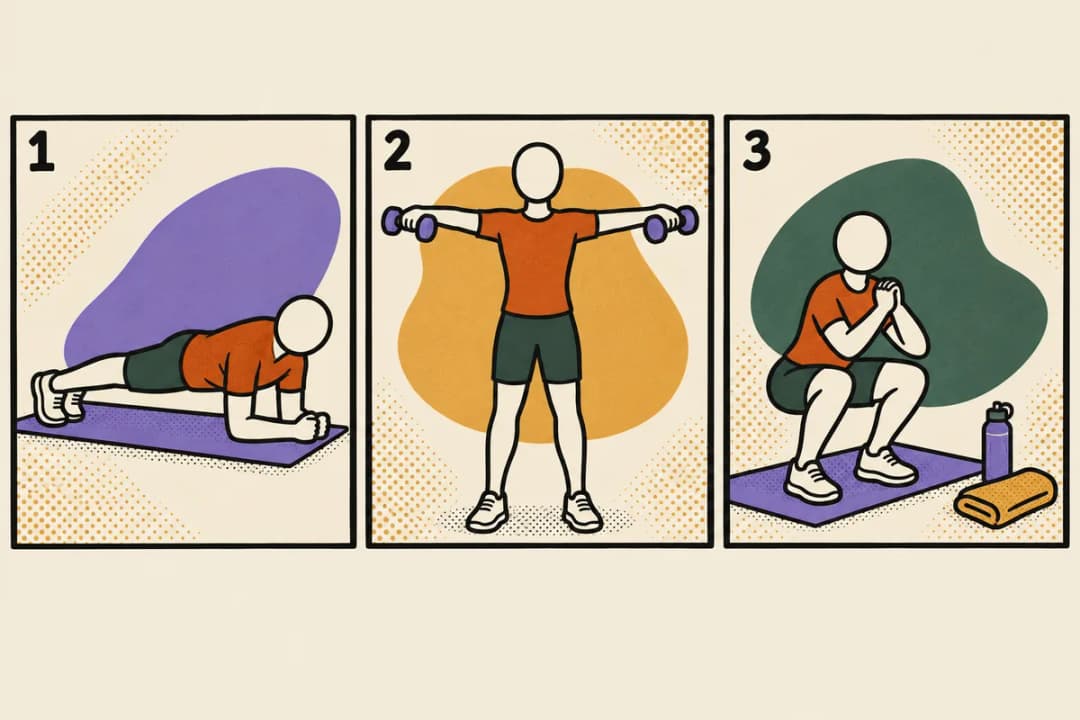


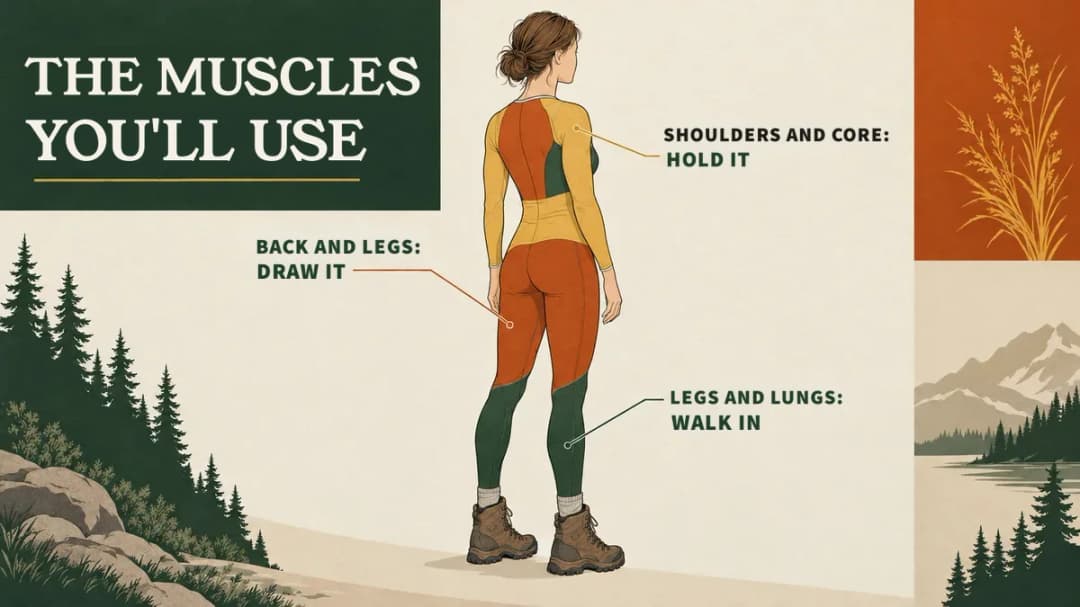
- Crossbow hunting asks for back and leg strength to cock, shoulder and core strength to hold steady, and stamina to walk in.
- Ten simple moves, from planks to rows to squats, cover all of it with little or no equipment.
- The CDC recommends 150 minutes of moderate activity and 2 strength days a week for adults.
- Consistency beats intensity: a few short sessions every week before the season.
- Calm, focused breathing helps you hold still when a deer finally steps out.
Winded on the walk in, arms shaking in the stand, and the crosshairs wobble exactly when it counts. 😓
That’s fitness, not aim, and the fix is a short routine: strengthen your back, shoulders, core and legs, and build walking stamina, two or three times a week. Start now, add a sling for the carry, and you’ll arrive with energy to spare. 💪
Upper-body and core exercises for crossbow hunters: cock it and hold it steady
Cocking a crossbow with a rope aid is a bend-and-stand lift that uses your back, shoulders and legs. Holding a 6–8 lb crossbow on target works your shoulders and core, so these five moves come first.
1. Planks for a steady core
A strong core keeps your upper body still while you aim, sitting or standing. Hold a plank as long as you can with good form, then add a few seconds each session.
Core strength also helps you sit still through long waits. Pair it with a crossbow you can actualy cock: see how to choose crossbow draw weight.
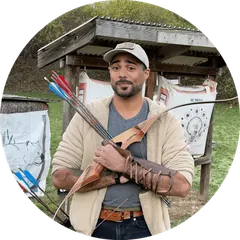
Two-time Olympic silver medalist Jake Kaminski, whose strength video closes this post, adds one core move to planks for exactly this job. A Pallof hold means pressing a band or cable out from your chest and holding it there without letting it twist you:
A Pallof hold, super good for stability, especially in the wind.
Wind is the part that matters for hunters. A gust pushing on you and a heavy crossbow is a twisting force, and an anti-twist hold trains exactly what keeps the crosshairs still.
2. Lateral raises for strong shoulders
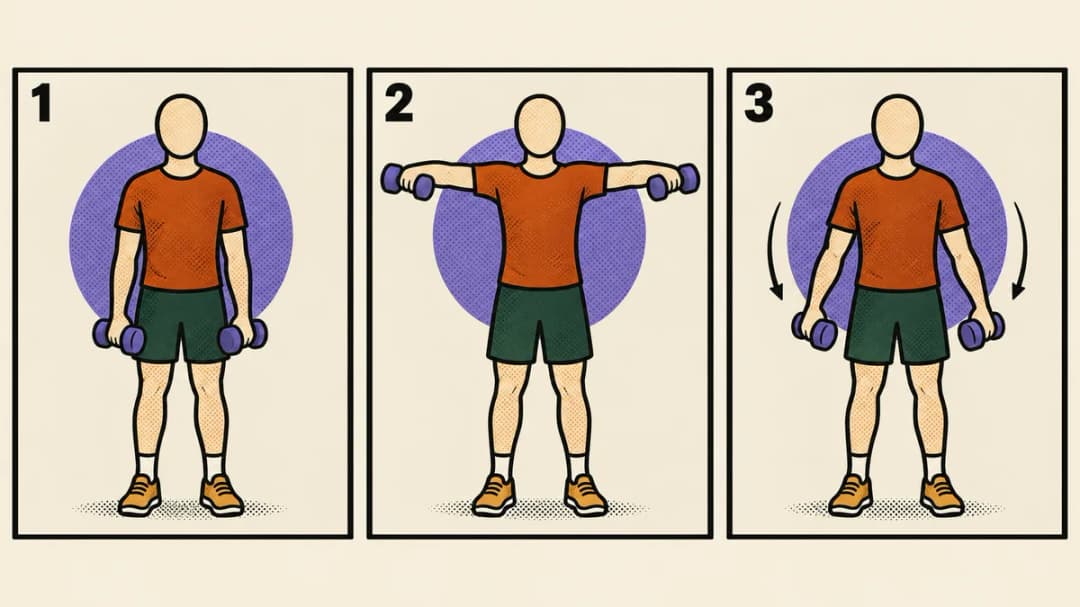
Stand tall and raise light dumbbells out to the sides, up to shoulder height, then lower slowly. Your deltoids hold the crossbow up while you wait for the shot.
3. Straight-arm front raises for a steady hold
Raise a light dumbbell straight out in front of you to shoulder height and hold it for a few seconds. It trains the front of the shoulder, the same muscle that keeps your crossbow’s fore-end up.
Smooth, slow reps beat heavy weight here. A steady hold also makes better use of a good crossbow scope.
4. Rows for a strong back
Single-arm dumbbell rows work your lats, rhomboids and rear shoulders. These back muscles do much of the work when you stand up with a rope cocker.
A strong back also means better posture and less fatigue on long sits (and there are plenty). Put that strength to work with straight crossbow bolts and sharp broadheads.
5. Grip work for control
Dead hangs from a bar or a simple grip trainer build hand strength. A firm, relaxed grip helps you control a heavy crossbow in cold or wet hands.
And better grip also makes carrying and cocking easier.
Leg, cardio, balance and focus exercises for the walk in
Most of a hunt is walking, climbing and waiting. These five moves build the legs, lungs and calm that carry you through it.
6. Squats for strong legs
Bodyweight squats build the legs that carry you and your gear over rough ground. They also help with cocking, since you stand up out of a bend to draw the string.
7. Walking, hiking or running for stamina
Brisk walks, hikes with a loaded pack or easy runs build your heart and lungs. Better stamina means steadier breathing when you finally line up a shot.
Fitness also affects how far you should shoot. Know your limits and read how far you can ethically shoot game with a crossbow.
8. Balance training
Stand on one leg, or use a balance board, for 30 seconds at a time. Hunting ground is rarely flat, and better balance cuts the wobble when you shoot off uneven footing.
Then test that balance with real shots on a crossbow target.
9. Yoga for flexibility
Yoga or simple stretching improves your range of motion. Flexible hips and shoulders make it easier to twist for a shot from a stand or blind.
10. Focused breathing for a calm shot
A few minutes of slow breathing or meditation a day trains you to settle down on purpose. A calm mind helps you wait for the right shot instead of rushing it.
Drawing and cocking are back work, and a cheap band trains it. I bought one at the gym that goes around a door, sold for back exercises, and trained with it alongside shooting.
It was like a band that I put around the door to do some exercises for my back. I think it helped for sure.
Additional archery exercise tips: build a weekly routine
Consistency matters more than any single exercise. Regular sessions, good food and real rest will do more than one hard week before the season.
Kaminski trained full-time at the Olympic Training Center, and his numbers for how long and how often are refreshingly modest:
Each workout should take roughly 20 to 40 minutes to complete plus a warm-up… I suggest 3 days a week off season, 2 days a week on season.
That fits a hunter’s year well. Build in the off-season, then drop to two short sessions once you’re hunting, so you’re not sore on the walk in. He found that going much past 40 minutes stopped paying off, so a short session done well beats a long one done tired.
The CDC’s adult guidelines are a good target for hunters too. Here’s how they fit around these ten moves.
| CDC guideline (adults) | What it means for your routine |
|---|---|
| 150 minutes of moderate-intensity activity a week | About 30 minutes of brisk walking or hiking, 5 days a week |
| Or 75 minutes of vigorous activity a week | Shorter runs or hill hikes instead of walks |
| Muscle-strengthening on at least 2 days a week | Exercises 1–6 on two days, working all major muscle groups |
| Work legs, hips, back, abdomen, chest, shoulders and arms | Planks, squats, rows, raises and grip work cover them |
Kaminski also explains how he picks what to train each session:
I always recommend to do a full body workout… That way you’re not extra sore the next couple days. You just have an overall body soreness.
He means it for archers who shoot the next day, and it suits hunters for the same reason. A full-body session leaves you a little sore everywhere, not unable to cock a crossbow on Saturday, which is what a heavy leg or back day the night before can do.
- Use intervals, such as a fast uphill walk then a rest, to mimic a hunt.
- Choose free weights or bands for a natural range of motion.
- Check your form in a mirror to avoid strain.
- Stay hydrated and fueled on workout days and hunting days.
- Practice cocking your crossbow with your cocking aid, the way you will in the field.
These do’s and don’ts keep the routine safe. Build up slowly, especially if you’re new to training.
Do
- Warm up before every workout.
- Take rest days and listen to your body.
- Add weight or reps a little at a time.
- Track your progress.
- Ask a doctor or trainer if you’re new to exercise.
Don’t
- Jump into high-intensity work without building up.
- Train through sharp pain.
- Repeat the same routine for months with no progress.
- Expect results in a week.
- Skip professional advice when you have an injury.

// Free printable
Get the range log I actually use.
Seventeen printable pages: session log, score tracker, a 30-day drill challenge, a bow maintenance card, a first-season checklist and more. Join the monthly email and it lands right away.
Benefits of exercise for crossbow hunting: pros and cons
Training takes time, but the payoff shows up in the field. Here’s the honest trade-off.
Pros
- More stamina for long walks and sits
- A steadier hold on target
- Easier, safer cocking
- Lower injury risk from better conditioning
- Better overall health
Cons
- It takes regular time every week
- Some gear, like dumbbells or bands, may need buying
- Overtraining is a risk without rest days
- Poor form can strain muscles without guidance
Crossbows show up in surprising places, including military special forces.
This video from an Olympic archer covers strength training for archery. Most of it carries over to crossbow hunters.
// FAQ
Frequently asked questions
Quick answers to the questions readers ask most.
How often should crossbow hunters exercise?
The CDC recommends 150 minutes of moderate activity and at least 2 strength days a week for adults. Spread it out, such as 30 minutes on 5 days.
Can resistance training improve crossbow accuracy?
Yes. Stronger shoulders and a stronger core let you hold a heavy crossbow on target longer with less wobble.
Do I need a gym membership to do these exercises?
No. Planks, squats, balance work and band exercises all work at home with little or no gear.
How heavy is a hunting crossbow?
Many hunting crossbows weigh around 6–8 lb before a scope and quiver; the Ravin R10, for example, is listed at 6.8 lb. Add accessories and you’re holding more, which is why shoulder strength matters.
Does it take a lot of strength to cock a crossbow?
Most quality hunting crossbows draw about 150–175 lb, and a few go past 200. A rope cocking aid cuts the effort by about half, and a crank cocker cuts it much further (TenPoint rates its ACUslide at about 5 lb of force).
Final thoughts
You don’t need a gym to get ready for crossbow season. Ten simple moves, done consistently, cover cocking, carrying and holding steady.
Start a few weeks before the season and build up slowly. Pair your new strength with the right gear from the best crossbows, and log your progress in the free range log.
